Meet Echo: The Little Frog Who Invites Us to Look Deeper
If you have read The Moonkeeper’s Cat, you may remember a little green frog sitting beside a pool of reflected stars. His appearance is brief, but it comes at an important moment in Miro’s journey.
Today, I want to spend a little more time with him.
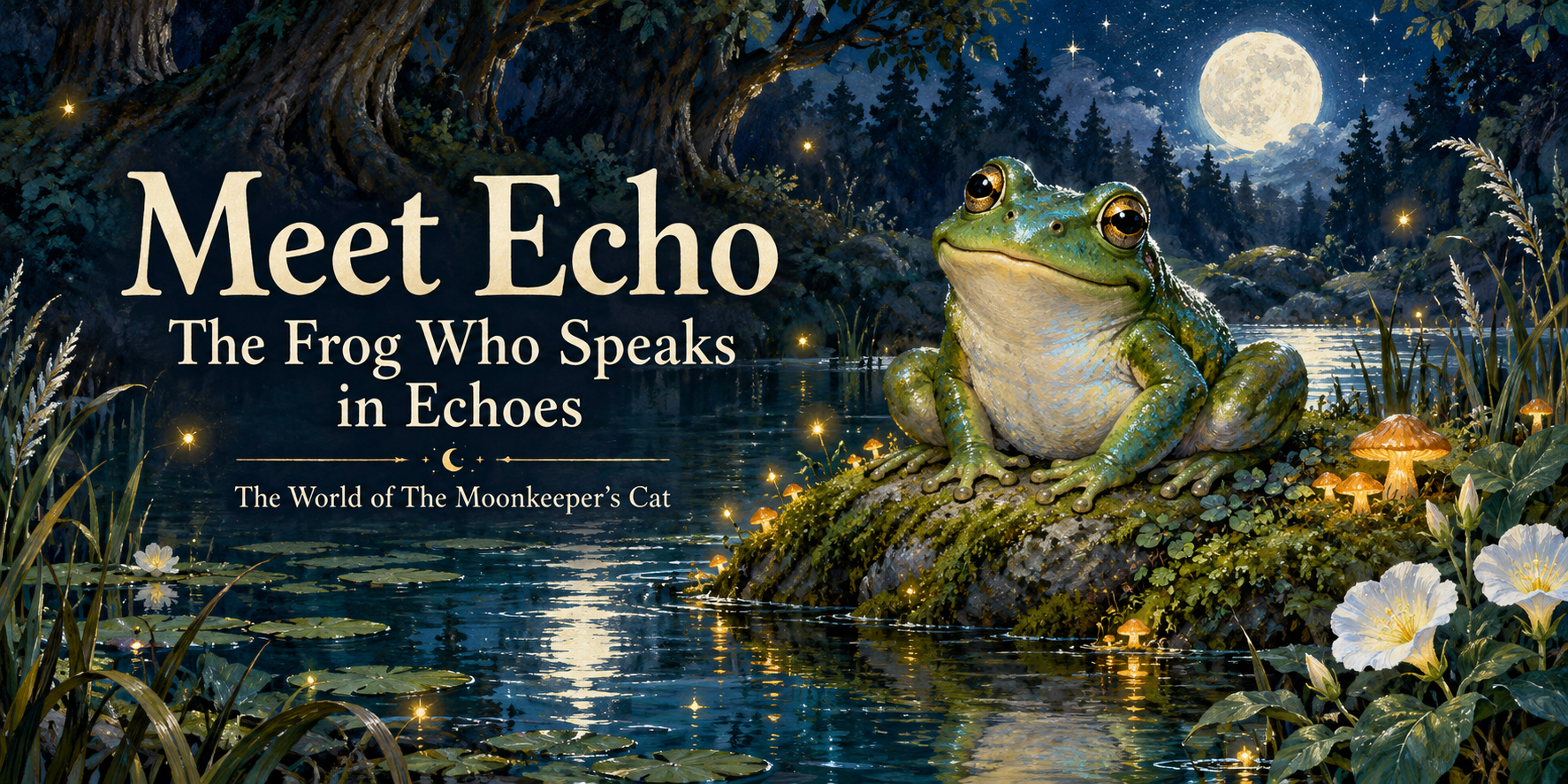
His name is Echo, and he is the frog we have come to know as The Frog Who Speaks in Echoes.
I picture Echo as a plump emerald-green frog with a faint shimmer to his skin and eyes that catch the starlight. He is playful, perceptive, and comfortable with a little mystery. A conversation with him might leave you smiling—or thinking about a question differently than you did before.
Readers first encounter Echo in the original The Moonkeeper’s Cat, during Miro’s nighttime search for the moon. By the time she reaches his pond, she has been looking outward, following her curiosity through the world around her.
Then a small frog invites her to look a little closer.
“Look deeper, cat,” he tells her. “The moon is in disguise.”
That invitation leads into one of the story’s most meaningful moments. Miro peers into the mirrored pool, sees her face shining back, and discovers that a little piece of the moon’s light has been with her all along.
Echo helps her notice something she could not yet see for herself.
That is an important kind of friendship.
We all need someone who can sit beside us patiently while we work something out. Someone who takes our questions seriously. Someone who offers just enough encouragement for us to try looking again. In that moment at the pond, Echo becomes that friend for Miro.
His own past remains one of the less explored corners of Moon Bay. The original story introduces him beside the water, already still and observant, without telling us where he came from or how he became such a thoughtful little creature. Readers receive a glimpse of him through what he does for someone else.
There is room to discover more about him as his place in this world grows.
In the wider world of Moon Bay, Echo is associated with the Listening Pond—a place of ripples, reflections, and questions worth sitting with. His way of communicating through echoes gives that setting its playful character. A familiar word can return with a slightly different meaning. A question can sound different after someone has truly listened to it.
That connection between listening and understanding is what makes him so meaningful to me.
When I began creating Moon Bay, I wanted children to find a place where their feelings belonged. Working with young children has shown me how much they can carry before they have all the words to explain it. Sometimes a child knows that something feels wrong long before they can tell you why.
I wanted these stories to give families gentle ways to begin those conversations.
Echo carries that hope into a small, quiet encounter. His patience gives Miro time to make a discovery of her own. His presence suggests that a question is welcome, even when the answer takes a while to arrive.
There is also something lovely about giving that role to a frog.
Children can enjoy his round little shape, the water, the reflected stars, and the unexpected things he says. As they return to the story, they may begin to notice what his encounter with Miro means. A character can be funny and comforting while also giving us something to think about.
I hope Echo’s pond scene leaves readers with a little more confidence in their own capacity for kindness, courage, and hope. Those qualities can be difficult to recognize in ourselves. Sometimes a friend helps us see them.
The next time you open The Moonkeeper’s Cat, I hope you will linger for a moment beside the pond. Look at Miro leaning toward the water. Look at the small frog waiting nearby.
There is a whole conversation in that quiet space.
There is something especially comforting about bread baking in a warm kitchen while wind moves across the sea.
In Moon Bay, bread is more than something placed beside a bowl of soup. It is carried to neighbors after storms, shared beneath glowing lanterns, wrapped in cloth for travelers walking the cliffs, and served at the lighthouse table whenever someone needs a place to belong.
Welcome to the Breads, Rolls & Savory Baking collection from The Lighthouse Kitchen, a recipe series inspired by The World of The Moonkeeper’s Cat.
This collection includes ten printable recipes filled with cozy flavors, practical baking directions, family-friendly preparation notes, serving suggestions, storage guidance, substitutions, and little pieces of Moon Bay lore.
Whether you are an experienced baker or preparing homemade bread for the first time, I hope these recipes bring a little warmth, wonder, and lighthouse light into your kitchen.
What You Will Find in Every Recipe
Each printable recipe has been designed to feel like a page from a treasured Moon Bay cookbook.
Every recipe includes:
A complete printable recipe
A little piece of Moon Bay lore
A clear ingredient list
Step-by-step directions
Family-friendly preparation notes
Serving and storage suggestions
Possible ingredient substitutions
The character or Moon Bay location that inspired it
The recipes range from simple quick breads and biscuits to traditional yeast breads and a patient winter sourdough. There is something here for quiet breakfasts, family suppers, afternoon tea, holiday tables, and stormy evenings spent reading beside a lantern.
1. The Moonkeeper’s Moonbread
Culinary home: Lighthouse Bakery Theme: Home Season: All year
The Moonkeeper’s Moonbread is the signature loaf of the lighthouse.
Alden shapes the dough into two round loaves—one for the lighthouse table and another to share with someone in Moon Bay. Before baking, each loaf is dusted with flour and scored with a crescent moon.
The finished bread has a deeply golden crust and a soft, tender center. Honey adds gentle sweetness without turning it into dessert bread.
This is the kind of loaf that belongs beside warm soup, homemade jam, or a small dish of butter and honey.
More than anything, Moonbread represents the feeling of coming home.
RECIPE 01 • LIGHTHOUSE BAKERY
The Moonkeeper’s Moonbread
Theme: Home • Season: All year • Yield: 2 round loaves (about 10 slices each)
MOON BAY LORE On clear evenings, Alden shapes two round loaves before he climbs to the Lantern Room – one for the lighthouse table and one to share in Moon Bay. A crescent is scored across each top so anyone arriving after dark knows there is always bread, warmth, and a place beside the fire.
Recipe at a Glance
Time: 25 min prep + 1 1/2 hr rise + 28 min bake | Oven: 375 F
Ingredients
1 1/4 cups warm water (105-110 F)
2 1/4 tsp active dry yeast (1 packet)
1/4 cup honey
4 tbsp unsalted butter, melted and cooled
1 large egg
1 1/2 tsp fine sea salt
4 to 4 1/4 cups bread flour, plus more for shaping
1 tbsp milk or plant milk, for brushing
1 tbsp flour, for dusting
Directions
Stir the warm water, yeast, and 1 tablespoon of the honey in the bowl of a stand mixer. Rest 5-10 minutes, until foamy.
Add the remaining honey, melted butter, egg, salt, and 4 cups flour. Mix with the dough hook on low until combined, then knead on medium-low for 6-7 minutes. Add the remaining flour only if the dough is very sticky; it should feel soft and slightly tacky.
Place in a lightly greased bowl, cover, and let rise in a warm spot for 50-60 minutes, or until doubled.
Divide in half. Shape each half into a smooth round and place on a parchment-lined baking sheet. Cover loosely and rise 30-40 minutes.
Heat oven to 375 F. Brush with milk, dust lightly with flour, and use a sharp knife to score a crescent moon on each loaf.
Bake 25-28 minutes, until deep golden and 190-195 F in the center. Cool at least 30 minutes before slicing.
LITTLE HELPERS Young helpers can measure flour, stir the yeast mixture, and brush the risen loaves. An adult should handle the mixer hook, scoring knife, and hot pan.
SERVE & STORE Serve warm with butter, honey, soup, or jam. Store airtight at room temperature for 3 days, or freeze sliced loaves for up to 2 months.
SUBSTITUTIONS Use all-purpose flour for a softer loaf, adding only enough to form a tacky dough. Replace butter with plant-based butter and milk with unsweetened oat milk. Maple syrup may replace honey, though the flavor will be less floral.
STORY INSPIRATION Inspired by Alden Elias Tidewell and the lighthouse itself – both quietly offering guidance, shelter, and a way home.
Mrs. Bramble never lets a perfectly ripe banana go to waste.
Her Golden Hearth Banana Bread is filled with soaked golden raisins, sunflower seeds, cinnamon, miniature chocolate chips, and the warm fragrance of vanilla. A little espresso powder deepens the chocolate flavor without making the bread taste like coffee.
This generous recipe makes four small loaves.
In Moon Bay, one loaf is kept at home, one is carried to a neighbor, one is sent to the lighthouse, and the fourth is saved for whoever might need cheering.
A sparkling layer of turbinado sugar gives each loaf a beautifully golden top.
RECIPE 02 • HARBOR BAKERY
Mrs. Bramble’s Golden Hearth Banana Bread
Theme: Sharing • Season: Autumn • Yield: 4 small 6 x 9-inch loaves
MOON BAY LORE Mrs. Bramble saves the ripest bananas for the loaves she sends across Moon Bay after blustery days. Golden raisins, sunflower seeds, and tiny chocolate chips make every slice feel generous. The four-loaf batch is intentional: one for home, one for a neighbor, one for the lighthouse, and one for whoever may need cheering.
Recipe at a Glance
Time: 25 min prep + overnight soak + 70-80 min bake | Oven: 325 F
Ingredients
1 cup golden raisins
Warm water, for soaking
10 very ripe bananas, mashed
1 tbsp pure vanilla extract
1/4 cup packed light brown sugar
2 large eggs
1/2 cup unsalted butter (1 stick), melted and cooled
1/4 cup vegetable oil
3 cups bread flour
2 tsp baking powder
2 tsp baking soda
3 tsp ground cinnamon
1/2 tsp espresso powder
1/2 tsp fine salt
1/4 cup sunflower seeds
1/4 cup mini semisweet chocolate chips
4 tbsp turbinado sugar, divided
Directions
The night before baking, cover the golden raisins with warm water. Refrigerate overnight, then drain and pat dry.
Heat oven to 325 F. Grease and line four small 6 x 9-inch loaf pans, leaving parchment overhangs.
In a stand mixer, combine all wet ingredients: mashed bananas, vanilla, brown sugar, eggs, melted butter, and vegetable oil. Mix on low until evenly blended.
In a separate bowl, whisk flour, baking powder, baking soda, cinnamon, espresso powder, and salt.
Add the dry mixture to the wet mixture in three additions, mixing on low only until no dry streaks remain. Fold in the drained raisins, sunflower seeds, and mini chocolate chips.
Divide batter evenly among the four pans. Sprinkle 1 tablespoon turbinado sugar over each loaf.
Bake 70-80 minutes. Begin checking early; remove when the tops are golden and a tester inserted in the center comes out with a few moist crumbs. Cool 20 minutes in pans, then move to racks.
LITTLE HELPERS Children can mash bananas, drain raisins, and sprinkle the sugar. Use the mixer on low and stop as soon as the flour disappears; overmixing can make quick bread heavy.
SERVE & STORE Serve at room temperature or lightly warmed. Wrap cooled loaves and keep 3 days at room temperature or 5 days refrigerated. Freeze whole or sliced loaves for up to 3 months.
SUBSTITUTIONS Use dairy-free butter for the butter. Pumpkin seeds may replace sunflower seeds. Omit espresso powder if desired; it deepens the chocolate flavor but does not make the bread taste like coffee. Use raisins without soaking when time is short.
STORY INSPIRATION Inspired by Mrs. Bramble, the warm and welcoming owner of Moon Bay’s harbor bakery, and her belief that every good bake should be shared.
It asks the baker to watch for small signs: bubbles forming in the starter, air gathering inside the dough, and a gentle rise that happens in its own time.
Storm-Watch Sourdough is inspired by winter nights at the lighthouse, when waves crash against the cliffs and Alden keeps watch over Moon Bay.
The loaf develops a deeply browned crust and a tender, pleasantly chewy center. Its long fermentation makes it an ideal baking project for a quiet weekend at home.
This recipe also includes safety notes for baking with a preheated Dutch oven and suggestions for making sourdough without a traditional proofing basket.
Like courage, sourdough grows slowly—one careful step at a time.
MOON BAY LORE When winter waves strike the cliffs, Alden keeps a loaf fermenting near the warm kitchen wall. Sourdough cannot be hurried; it asks the baker to trust small signs – bubbles, lift, and a living stretch in the dough. By storm watch, the crust is sturdy, the center is tender, and courage smells remarkably like warm bread.
Recipe at a Glance
Time: 30 min hands-on + 12-18 hr fermentation + 45 min bake | Oven: 475 F, then 450 F
Ingredients
100 g active sourdough starter, bubbly and recently fed
350 g lukewarm water
500 g bread flour
10 g fine sea salt
Rice flour or bread flour, for the basket
Directions
Mix starter and water in a large bowl. Add flour and stir until no dry patches remain. Cover and rest 30 minutes.
Sprinkle in salt. With damp hands, pinch and fold until incorporated. Cover and rest 30 minutes.
Complete 4 sets of stretch-and-folds, one set every 30 minutes: lift each side of the dough and fold it over the center. Cover between sets.
Let rise at room temperature until airy, jiggly, and about 50 percent larger, usually 3-6 hours depending on room temperature.
Shape into a tight round. Place seam-side up in a well-floured towel-lined bowl or proofing basket. Cover and refrigerate 8-12 hours.
Place a Dutch oven in the oven and heat to 475 F for 30 minutes. Turn cold dough onto parchment, score the top, and carefully lower it into the hot pot.
Bake covered 25 minutes. Reduce heat to 450 F, uncover, and bake 18-22 minutes more, until deeply browned. Cool 2 hours before slicing.
LITTLE HELPERS Children can mix and fold the dough with damp hands. An adult must move the preheated Dutch oven and score the loaf. Use long oven mitts and keep everyone clear of escaping steam.
SERVE & STORE Serve with stew, salted butter, or honey. Keep cut-side down on a board for 1 day, then store in a bread bag for up to 3 more days. Freeze slices for 2 months.
SUBSTITUTIONS No proofing basket is needed; use a bowl lined with a clean, heavily floured towel. All-purpose flour works, but begin with 330 g water. For a milder loaf, shorten the cold proof to 6 hours.
STORY INSPIRATION Inspired by the lighthouse during winter storms and Miro’s courage: moving forward carefully, even when the way feels uncertain.
4. Mara Belle’s Rosemary Focaccia
Culinary home: Lighthouse Bakery Theme: Legacy Season: Spring
Rosemary still grows beside the lighthouse stone path where Mara Belle once tended the garden.
Alden says its fragrance can fill a room with a memory before anyone speaks.
Mara Belle’s Rosemary Focaccia is soft, airy, and rich with olive oil. Fresh rosemary and flaky sea salt cover the deeply dimpled surface. Cherry tomatoes may also be added for a bright spring variation.
This recipe is naturally dairy-free and egg-free, making it an especially flexible bread for family gatherings.
It is delicious beside soup, sliced for sandwiches, or served warm with olive oil.
Every fragrant slice is a reminder that kindness can become part of a home’s legacy.
RECIPE 04 • LIGHTHOUSE BAKERY
Mara Belle’s Rosemary Focaccia
Theme: Legacy • Season: Spring • Yield: One 9 x 13-inch focaccia (12 pieces)
MOON BAY LORE Rosemary still grows beside the lighthouse stone path where Mara Belle once brushed its leaves between her fingers. Alden says the scent can fill a room with a memory before anyone speaks. This soft, olive-oil-rich bread keeps that fragrance at the table – a reminder that love can remain part of a home long after a season has changed.
Recipe at a Glance
Time: 20 min prep + 1 1/2 hr rise + 25 min bake | Oven: 425 F
Ingredients
1 3/4 cups warm water (105-110 F)
2 1/4 tsp instant or active dry yeast
1 tbsp honey
4 cups bread flour
2 tsp fine sea salt
1/3 cup extra-virgin olive oil, divided
2 tbsp fresh rosemary leaves
1 tsp flaky sea salt
Optional: 1/2 cup halved cherry tomatoes
Directions
Combine warm water, yeast, and honey in a large bowl. If using active dry yeast, rest 5-10 minutes until foamy.
Stir in flour, fine salt, and 2 tablespoons olive oil until a sticky dough forms. Knead with a stand-mixer dough hook for 5 minutes, or fold vigorously by hand for 2-3 minutes.
Cover and let rise 45-60 minutes, until doubled.
Pour 2 tablespoons olive oil into a 9 x 13-inch metal pan. Transfer the dough to the pan and gently stretch it toward the corners. Rest 20-30 minutes if it springs back.
Heat oven to 425 F. Drizzle remaining oil over dough. Press deep dimples with oiled fingertips, then scatter rosemary, flaky salt, and optional tomatoes over the top.
Bake 22-27 minutes, until deeply golden at the edges. Cool 10 minutes before lifting from the pan and slicing.
LITTLE HELPERS Dimpling the dough is a perfect job for clean little hands. An adult should place and remove the hot metal pan. Explain that the air bubbles are what make focaccia light, so press gently rather than flattening it.
SERVE & STORE Serve warm with soup or as sandwich bread. Store airtight for 2 days. Rewarm at 350 F for 6-8 minutes, or freeze pieces for up to 2 months.
SUBSTITUTIONS Use all-purpose flour with the same measurement. Dried rosemary may replace fresh; use 2 teaspoons. Maple syrup may replace honey. For dairy-free and vegan focaccia, the recipe already needs no dairy or eggs.
STORY INSPIRATION Inspired by Mara Belle Tidewell, whose encouragement, garden, and kindness continue to shape the lighthouse and Alden’s life.
5. Sea-Salt Honey Rolls
Culinary home: Harbor Bakery Theme: Community Season: All year
At Mrs. Bramble’s bakery, these soft honey rolls are placed close enough to touch as they bake.
They rise together, turn golden together, and are pulled apart at long community tables after lantern walks and harbor celebrations.
A little honey sweetens the dough, while flaky sea salt recalls the bay that gathers everyone together.
These rolls are soft enough for children, sturdy enough for supper, and simple enough to serve throughout the year.
Dairy-free and egg-free substitutions are included, along with freezing and reheating directions for families who enjoy baking ahead.
RECIPE 05 • HARBOR BAKERY
Sea-Salt Honey Rolls
Theme: Community • Season: All year • Yield: 12 soft rolls
MOON BAY LORE At Mrs. Bramble’s bakery, these rolls are baked close enough to touch. Harbor families pull them apart at long tables after lantern walks, passing the basket until every hand has taken one. A little honey brings sweetness; a few sea-salt flakes recall the bay that gathers everyone together.
Recipe at a Glance
Time: 25 min prep + 1 1/2 hr rise + 18 min bake | Oven: 375 F
Ingredients
1 cup warm milk or unsweetened oat milk (105-110 F)
2 1/4 tsp active dry yeast
1/4 cup honey, divided
4 tbsp unsalted butter or plant butter, melted
1 large egg
1 tsp fine sea salt
3 1/4 to 3 1/2 cups all-purpose flour
1 tbsp melted butter or plant butter, for brushing
1/2 tsp flaky sea salt
Directions
Stir warm milk, yeast, and 1 tablespoon honey in a stand-mixer bowl. Rest 5-10 minutes, until foamy.
Add remaining honey, melted butter, egg, salt, and 3 1/4 cups flour. Knead with the dough hook on medium-low for 6 minutes, adding only enough extra flour for a soft, slightly tacky dough.
Cover in a greased bowl and rise 50-60 minutes, until doubled.
Grease a 9 x 13-inch pan. Divide dough into 12 equal pieces, shape into smooth balls, and arrange in 3 rows of 4.
Cover and rise 30-40 minutes, until puffy. Heat oven to 375 F.
Bake 16-20 minutes, until golden and 190 F in the center. Brush immediately with melted butter and finish with flaky sea salt.
LITTLE HELPERS Children can shape the dough balls and arrange them in rows. For evenly sized rolls, an adult can divide the dough first or use a kitchen scale.
SERVE & STORE Serve warm with soup, supper, or honey butter. Keep airtight for 3 days. Rewarm wrapped rolls at 300 F for 8 minutes. Freeze up to 2 months.
SUBSTITUTIONS Use oat milk and plant butter for dairy-free rolls. Replace honey with maple syrup. For egg-free rolls, use 3 tablespoons aquafaba; the rolls will be slightly less rich.
STORY INSPIRATION Inspired by Mrs. Bramble’s Harbor Bakery and Moon Bay’s long community tables, where food is passed from neighbor to neighbor.
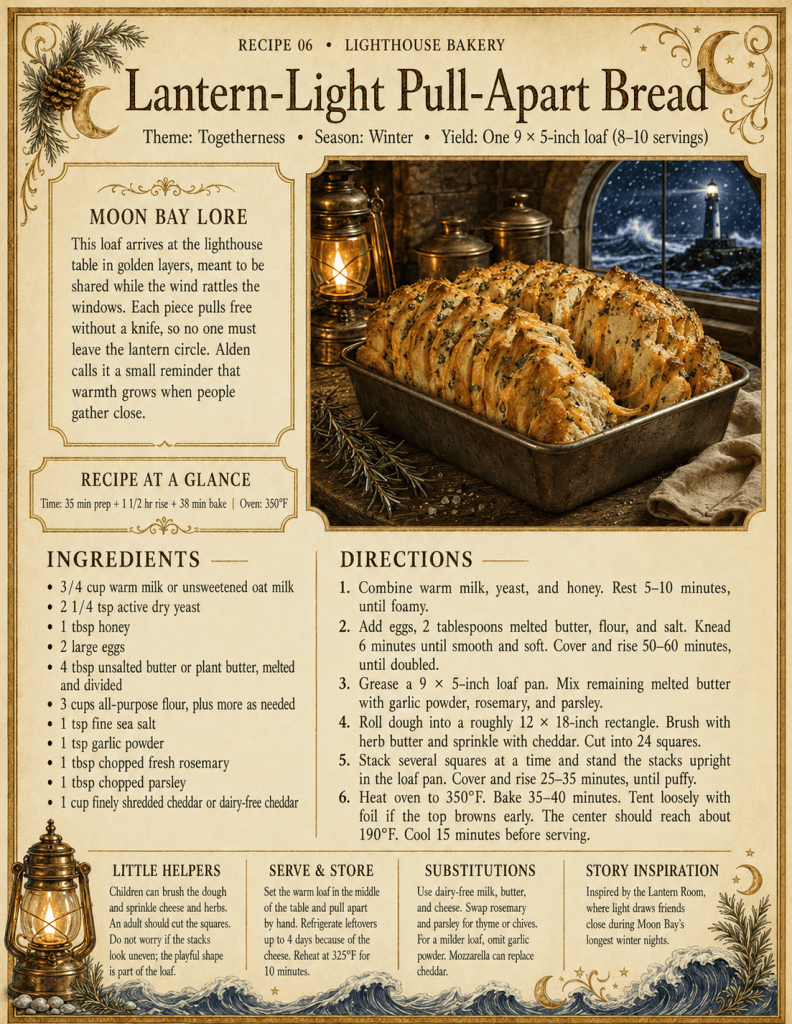
Lantern-Light Pull-Apart Bread is made for sharing beside the fire.
Soft squares of dough are brushed with rosemary-garlic butter, sprinkled with cheese, and stacked upright inside a loaf pan. As the bread bakes, the layers become golden along the edges while remaining soft in the center.
Everyone can pull away a warm piece without needing a knife—or leaving the lantern circle.
Children can help brush the dough and scatter the herbs and cheese before an adult cuts and stacks the pieces.
Serve this loaf with a winter soup, vegetable stew, or a simple family supper.
RECIPE 06 • LIGHTHOUSE BAKERY
Lantern-Light Pull-Apart Bread
Theme: Togetherness • Season: Winter • Yield: One 9 x 5-inch loaf (8-10 servings)
MOON BAY LORE This loaf arrives at the lighthouse table in golden layers, meant to be shared while the wind rattles the windows. Each piece pulls free without a knife, so no one must leave the lantern circle. Alden calls it a small reminder that warmth grows when people gather close.
Recipe at a Glance
Time: 35 min prep + 1 1/2 hr rise + 38 min bake | Oven: 350 F
Ingredients
3/4 cup warm milk or unsweetened oat milk
2 1/4 tsp active dry yeast
1 tbsp honey
2 large eggs
4 tbsp unsalted butter or plant butter, melted and divided
3 cups all-purpose flour, plus more as needed
1 tsp fine sea salt
1 tsp garlic powder
1 tbsp chopped fresh rosemary
1 tbsp chopped parsley
1 cup finely shredded cheddar or dairy-free cheddar
Directions
Combine warm milk, yeast, and honey. Rest 5-10 minutes, until foamy.
Add eggs, 2 tablespoons melted butter, flour, and salt. Knead 6 minutes until smooth and soft. Cover and rise 50-60 minutes, until doubled.
Grease a 9 x 5-inch loaf pan. Mix remaining melted butter with garlic powder, rosemary, and parsley.
Roll dough into a roughly 12 x 18-inch rectangle. Brush with herb butter and sprinkle with cheddar. Cut into 24 squares.
Stack several squares at a time and stand the stacks upright in the loaf pan. Cover and rise 25-35 minutes, until puffy.
Heat oven to 350 F. Bake 35-40 minutes. Tent loosely with foil if the top browns early. The center should reach about 190 F. Cool 15 minutes before serving.
LITTLE HELPERS Children can brush the dough and sprinkle cheese and herbs. An adult should cut the squares. Do not worry if the stacks look uneven; the playful shape is part of the loaf.
SERVE & STORE Set the warm loaf in the middle of the table and pull apart by hand. Refrigerate leftovers up to 4 days because of the cheese. Reheat at 325 F for 10 minutes.
SUBSTITUTIONS Use dairy-free milk, butter, and cheese. Swap rosemary and parsley for thyme or chives. For a milder loaf, omit garlic powder. Mozzarella can replace cheddar.
STORY INSPIRATION Inspired by the Lantern Room, where light draws friends close during Moon Bay’s longest winter nights.
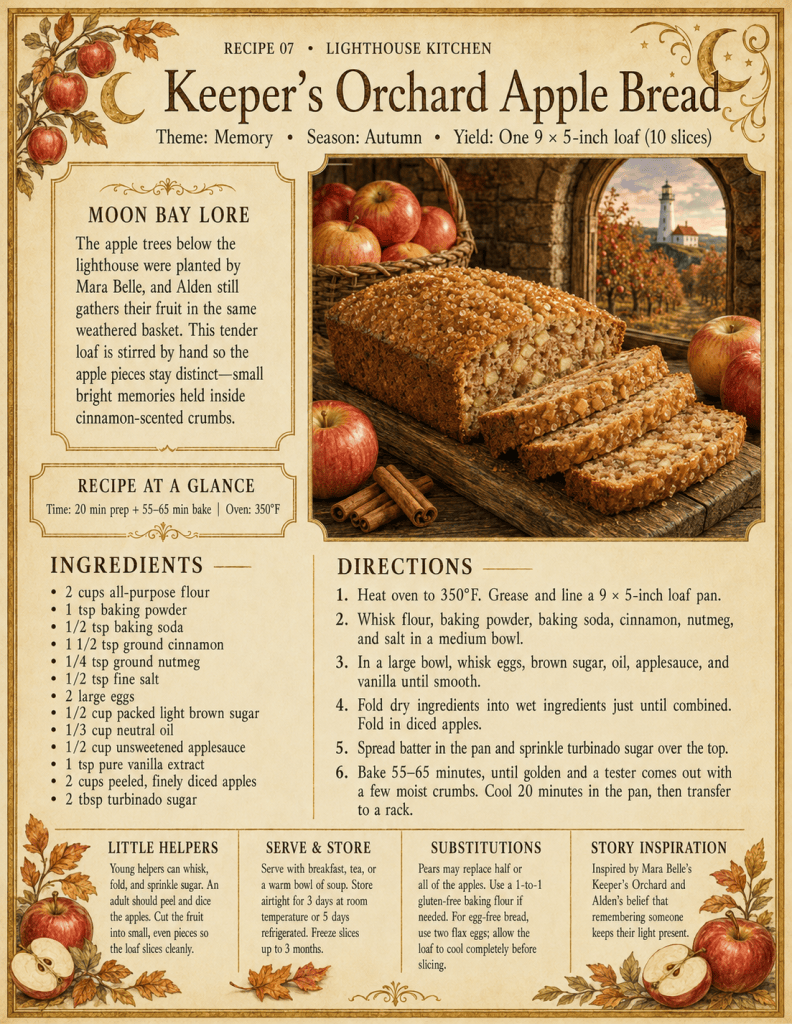
The apple and pear trees below the lighthouse were planted by Mara Belle.
Each autumn, Alden still carries the same weathered basket into the Keeper’s Orchard to gather their fruit.
Keeper’s Orchard Apple Bread is a tender quick bread filled with finely diced apples, cinnamon, nutmeg, brown sugar, and applesauce. Turbinado sugar creates a lightly sparkling top.
The apple pieces remain visible inside every slice—small, bright memories held within cinnamon-scented crumbs.
Pears can replace some or all of the apples, and gluten-free and egg-free options are included.
This bread is lovely for breakfast, afternoon tea, or a quiet snack after an orchard walk.
RECIPE 07 • LIGHTHOUSE KITCHEN
Keeper’s Orchard Apple Bread
Theme: Memory • Season: Autumn • Yield: One 9 x 5-inch loaf (10 slices)
MOON BAY LORE The apple trees below the lighthouse were planted by Mara Belle, and Alden still gathers their fruit in the same weathered basket. This tender loaf is stirred by hand so the apple pieces stay distinct – small bright memories held inside cinnamon-scented crumbs.
Recipe at a Glance
Time: 20 min prep + 55-65 min bake | Oven: 350 F
Ingredients
2 cups all-purpose flour
1 tsp baking powder
1/2 tsp baking soda
1 1/2 tsp ground cinnamon
1/4 tsp ground nutmeg
1/2 tsp fine salt
2 large eggs
1/2 cup packed light brown sugar
1/3 cup neutral oil
1/2 cup unsweetened applesauce
1 tsp pure vanilla extract
2 cups peeled, finely diced apples
2 tbsp turbinado sugar
Directions
Heat oven to 350 F. Grease and line a 9 x 5-inch loaf pan.
Whisk flour, baking powder, baking soda, cinnamon, nutmeg, and salt in a medium bowl.
In a large bowl, whisk eggs, brown sugar, oil, applesauce, and vanilla until smooth.
Fold dry ingredients into wet ingredients just until combined. Fold in diced apples.
Spread batter in the pan and sprinkle turbinado sugar over the top.
Bake 55-65 minutes, until golden and a tester comes out with a few moist crumbs. Cool 20 minutes in the pan, then transfer to a rack.
LITTLE HELPERS Young helpers can whisk, fold, and sprinkle sugar. An adult should peel and dice the apples. Cut the fruit into small, even pieces so the loaf slices cleanly.
SERVE & STORE Serve with breakfast, tea, or a warm bowl of soup. Store airtight for 3 days at room temperature or 5 days refrigerated. Freeze slices up to 3 months.
SUBSTITUTIONS Pears may replace half or all of the apples. Use a 1-to-1 gluten-free baking flour if needed. For egg-free bread, use two flax eggs; allow the loaf to cool completely before slicing.
STORY INSPIRATION Inspired by Mara Belle’s Keeper’s Orchard and Alden’s belief that remembering someone keeps their light present.
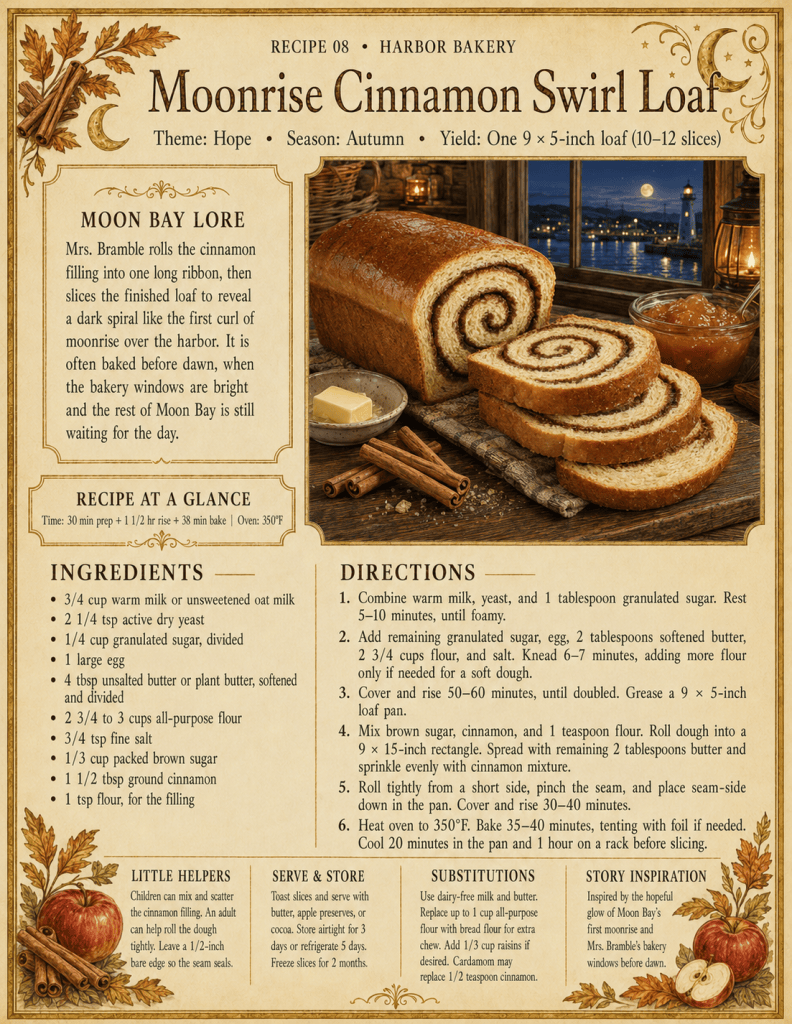
Mrs. Bramble prepares this cinnamon loaf before dawn, while Moon Bay is still quiet and the bakery windows glow against the dark harbor.
Brown sugar and cinnamon are rolled into the dough, creating a beautiful spiral inside every slice. When the loaf is cut, the swirl resembles the first curl of moonrise appearing over the water.
Serve it toasted with butter, apple preserves, or a warm cup of cocoa.
The recipe also includes dairy-free substitutions, optional raisins, and a cardamom variation for bakers who enjoy a little extra spice.
It is a hopeful bread—the sort of thing waiting in a bright window before the rest of the world has awakened.
RECIPE 08 • HARBOR BAKERY
Moonrise Cinnamon Swirl Loaf
Theme: Hope • Season: Autumn • Yield: One 9 x 5-inch loaf (10-12 slices)
MOON BAY LORE Mrs. Bramble rolls the cinnamon filling into one long ribbon, then slices the finished loaf to reveal a dark spiral like the first curl of moonrise over the harbor. It is often baked before dawn, when the bakery windows are bright and the rest of Moon Bay is still waiting for the day.
Recipe at a Glance
Time: 30 min prep + 1 1/2 hr rise + 38 min bake | Oven: 350 F
Ingredients
3/4 cup warm milk or unsweetened oat milk
2 1/4 tsp active dry yeast
1/4 cup granulated sugar, divided
1 large egg
4 tbsp unsalted butter or plant butter, softened and divided
2 3/4 to 3 cups all-purpose flour
3/4 tsp fine salt
1/3 cup packed brown sugar
1 1/2 tbsp ground cinnamon
1 tsp flour, for the filling
Directions
Combine warm milk, yeast, and 1 tablespoon granulated sugar. Rest 5-10 minutes, until foamy.
Add remaining granulated sugar, egg, 2 tablespoons softened butter, 2 3/4 cups flour, and salt. Knead 6-7 minutes, adding more flour only if needed for a soft dough.
Cover and rise 50-60 minutes, until doubled. Grease a 9 x 5-inch loaf pan.
Mix brown sugar, cinnamon, and 1 teaspoon flour. Roll dough into a 9 x 15-inch rectangle. Spread with remaining 2 tablespoons butter and sprinkle evenly with cinnamon mixture.
Roll tightly from a short side, pinch the seam, and place seam-side down in the pan. Cover and rise 30-40 minutes.
Heat oven to 350 F. Bake 35-40 minutes, tenting with foil if needed. Cool 20 minutes in the pan and 1 hour on a rack before slicing.
LITTLE HELPERS Children can mix and scatter the cinnamon filling. An adult can help roll the dough tightly. Leave a 1/2-inch bare edge so the seam seals.
SERVE & STORE Toast slices and serve with butter, apple preserves, or cocoa. Store airtight for 3 days or refrigerate 5 days. Freeze slices for 2 months.
SUBSTITUTIONS Use dairy-free milk and butter. Replace up to 1 cup all-purpose flour with bread flour for extra chew. Add 1/3 cup raisins if desired. Cardamom may replace 1/2 teaspoon cinnamon.
STORY INSPIRATION Inspired by the hopeful glow of Moon Bay’s first moonrise and Mrs. Bramble’s bakery windows before dawn.
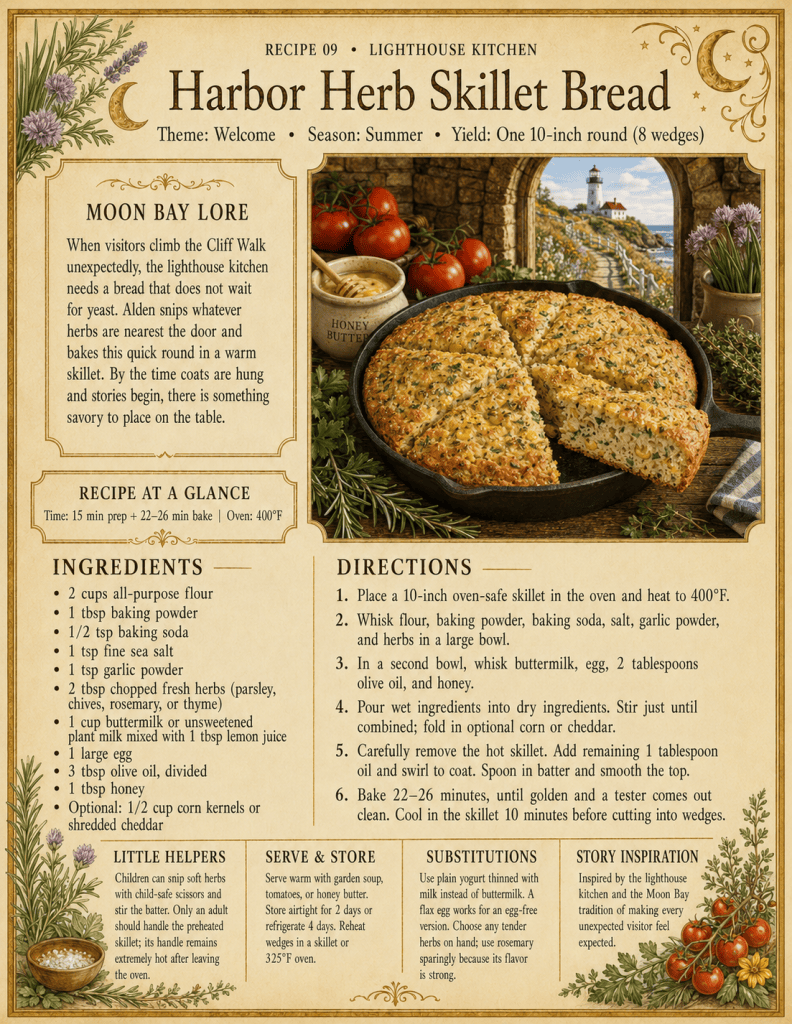
MOON BAY LORE When visitors climb the Cliff Walk unexpectedly, the lighthouse kitchen needs a bread that does not wait for yeast. Alden snips whatever herbs are nearest the door and bakes this quick round in a warm skillet. By the time coats are hung and stories begin, there is something savory to place on the table.
Recipe at a Glance
Time: 15 min prep + 22-26 min bake | Oven: 400 F
Ingredients
2 cups all-purpose flour
1 tbsp baking powder
1/2 tsp baking soda
1 tsp fine sea salt
1 tsp garlic powder
2 tbsp chopped fresh herbs (parsley, chives, rosemary, or thyme)
1 cup buttermilk or unsweetened plant milk mixed with 1 tbsp lemon juice
1 large egg
3 tbsp olive oil, divided
1 tbsp honey
Optional: 1/2 cup corn kernels or shredded cheddar
Directions
Place a 10-inch oven-safe skillet in the oven and heat to 400 F.
Whisk flour, baking powder, baking soda, salt, garlic powder, and herbs in a large bowl.
In a second bowl, whisk buttermilk, egg, 2 tablespoons olive oil, and honey.
Pour wet ingredients into dry ingredients. Stir just until combined; fold in optional corn or cheddar.
Carefully remove the hot skillet. Add remaining 1 tablespoon oil and swirl to coat. Spoon in batter and smooth the top.
Bake 22-26 minutes, until golden and a tester comes out clean. Cool in the skillet 10 minutes before cutting into wedges.
LITTLE HELPERS Children can snip soft herbs with child-safe scissors and stir the batter. Only an adult should handle the preheated skillet; its handle remains extremely hot after leaving the oven.
SERVE & STORE Serve warm with garden soup, tomatoes, or honey butter. Store airtight for 2 days or refrigerate 4 days. Reheat wedges in a skillet or 325 F oven.
SUBSTITUTIONS Use plain yogurt thinned with milk instead of buttermilk. A flax egg works for an egg-free version. Choose any tender herbs on hand; use rosemary sparingly because its flavor is strong.
STORY INSPIRATION Inspired by the lighthouse kitchen and the Moon Bay tradition of making every unexpected visitor feel expected.
10. Cliff-Walk Cheddar Biscuits
Culinary home: Harbor Bakery Theme: Belonging Season: All year
The walk between Harbor Village and the Moonkeeper’s Lighthouse follows a winding path along the cliffs.
Mrs. Bramble often sends a basket of warm cheddar biscuits to the first resting bench along the way. Travelers are invited to take one and leave one for whoever comes next.
These biscuits are filled with sharp cheddar, chives, cold butter, and buttermilk. Folding the dough creates tall, flaky layers without requiring complicated techniques.
The recipe also includes instructions for making dairy-free biscuits or easier drop biscuits.
Warm, savory, and easy to carry, they are a delicious reminder that the path belongs to everyone.
RECIPE 10 • HARBOR BAKERY
Cliff-Walk Cheddar Biscuits
Theme: Belonging • Season: All year • Yield: 10-12 biscuits
MOON BAY LORE The climb between Harbor Village and the lighthouse is easier with a warm biscuit wrapped in a napkin. Mrs. Bramble bakes these with sharp cheddar and sends a basket to the first bench along the Cliff Walk. Travelers take one and leave one, a simple custom that says the path belongs to everyone.
Recipe at a Glance
Time: 20 min prep + 15 min bake | Oven: 425 F
Ingredients
2 1/2 cups all-purpose flour
1 tbsp baking powder
1/2 tsp baking soda
1 tsp fine sea salt
1/2 tsp garlic powder
1/2 cup cold unsalted butter or plant butter, cubed
1 1/4 cups shredded sharp cheddar or dairy-free cheddar
1 tbsp chopped chives
1 cup cold buttermilk, plus more for brushing
Optional: flaky sea salt for the tops
Directions
Heat oven to 425 F. Line a baking sheet with parchment.
Whisk flour, baking powder, baking soda, salt, and garlic powder in a large bowl.
Cut in cold butter with a pastry blender or fingertips until the mixture resembles coarse crumbs with some pea-size pieces. Stir in cheddar and chives.
Pour in buttermilk and stir just until a shaggy dough forms. Turn onto a lightly floured surface and gently pat into a rectangle.
Fold the dough in thirds like a letter, rotate, and fold once more. Pat 3/4 inch thick. Cut with a 2 1/2-inch biscuit cutter, pressing straight down without twisting.
Place biscuits close together on the sheet. Brush tops with buttermilk and add optional flaky salt. Bake 13-16 minutes, until tall and golden.
LITTLE HELPERS Children can whisk dry ingredients and stamp biscuits with a blunt cutter. Keep butter and milk cold, and handle the dough as little as possible for tall, flaky layers.
SERVE & STORE Serve warm with soup, scrambled eggs, or apple butter. Store airtight for 2 days or refrigerate 4 days. Reheat at 350 F for 6-8 minutes. Freeze 2 months.
SUBSTITUTIONS Use dairy-free butter, cheese, and milk soured with lemon juice. Replace chives with parsley or thyme. For drop biscuits, add 2 extra tablespoons buttermilk and scoop the dough instead of folding and cutting.
STORY INSPIRATION Inspired by the Cliff Walk connecting Harbor Village to the lighthouse and the series theme that everyone deserves a place where they belong.
Baking with Children
The Lighthouse Kitchen is meant to be shared.
Many steps in these recipes are perfect for young helpers, including:
Measuring flour
Mashing bananas
Stirring ingredients
Brushing dough with milk or butter
Sprinkling herbs, cheese, or sugar
Pressing dimples into focaccia
Shaping rolls
Cutting biscuits with a blunt cutter
Adults should always supervise stand mixers, knives, hot skillets, Dutch ovens, stovetops, and baking pans.
Children do not need to complete every step to feel included. Even one small job can help them feel proud of what the family has made together.
Helpful Bread-Baking Tips
Check the temperature of your liquids
Water or milk used for yeast dough should feel pleasantly warm, not hot. A temperature between 105 and 110 F is ideal for activating yeast without damaging it.
Add flour gradually
Humidity, flour brands, and measuring methods can change how much flour dough needs. Add the final portion slowly and stop when the dough is soft and slightly tacky.
Give dough enough time to rise
Rising times are estimates. A cool kitchen may require additional time, while a warm kitchen may speed things up. Watch the dough rather than relying only on the clock.
Let bread cool before slicing
Fresh bread continues setting after it leaves the oven. Cutting too early can compress the crumb or make the center seem gummy.
Freeze extra loaves and slices
Most breads freeze beautifully. Cool them completely, wrap them well, and label them with the recipe name and date.
A Little Moon Bay Magic for Your Kitchen
The recipes of Moon Bay are not really about perfection.
They are about paying attention.
They are about noticing when the dough has risen, when the crust has turned golden, when a child wants to help, or when someone at the table could use an extra slice.
In The World of The Moonkeeper’s Cat, small acts of kindness create ripples that travel farther than we can see.
Perhaps baking can do the same.
A loaf carried to a neighbor, a biscuit left for a traveler, or a warm roll passed across the table may seem like a small thing.
But in Moon Bay, small lights are often the ones that guide us home.
Explore and Print the Recipes
Return to this collection whenever you need a cozy bread, a family baking activity, or a little inspiration from the lighthouse.
You can print each recipe individually and add it to your own Lighthouse Kitchen recipe binder.
More recipes from Moon Bay will continue to appear throughout the year, including:
Sweet treats from Mrs. Bramble’s Bakery
Soups and suppers
Teas and warm drinks
Recipes from the garden and orchard
Festival and seasonal recipes
Thank you for visiting Moon Bay and sharing a little time in The Lighthouse Kitchen.
May your kitchen be warm, your table be welcoming, and your windows always hold a little light.
There are some characters who burst into a story with excitement and adventure.
Then there are characters like Cordelia Pearlwater—the kind who quietly swim into your heart and stay there long after the last page is turned.
If you’ve already visited Moon Bay through The Moonkeeper’s Cat or followed Miro on one of his magical adventures, you’re about to meet another unforgettable friend. Cordelia lives beneath the sparkling waters surrounding the Moonkeeper’s Lighthouse, where moonlight filters through the waves and every shell seems to hold a story waiting to be discovered.
She isn’t a hero because she’s the strongest.
She isn’t extraordinary because she’s the fastest.
Cordelia is special because she notices what everyone else overlooks.
And sometimes, that’s the greatest gift of all.
Welcome Beneath the Waves of Moon Bay
Moon Bay is filled with enchanting places, from moonflower gardens that bloom beneath the stars to cozy lighthouse rooms glowing with golden lantern light. But beyond the shoreline lies another magical world—an underwater kingdom painted in brilliant corals, swaying seagrass, sparkling schools of fish, and hidden pearl-filled caves.
This peaceful corner of Moon Bay is where Cordelia Pearlwater calls home.
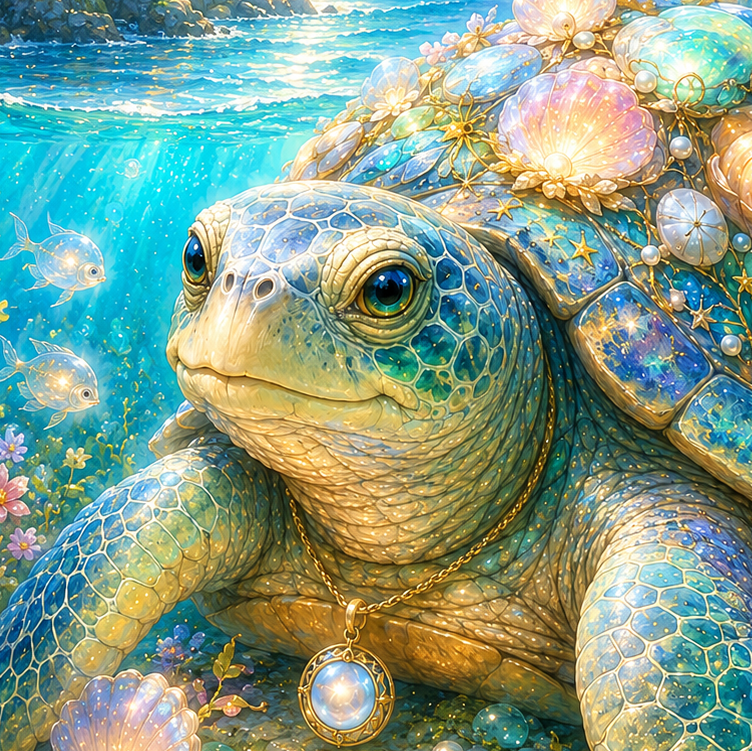
With her beautiful patterned shell, kind eyes, and calm spirit, Cordelia spends her days exploring coral reefs, greeting sea creatures, and collecting tiny treasures the tide leaves behind. While others rush past, she takes her time, believing every shell, feather, pebble, and sea-glass gem has a story worth remembering.
That gentle curiosity makes her unlike anyone else in Moon Bay.
The Sea Turtle Who Remembers
Every character in Moon Bay carries a unique kind of magic.
Miro teaches us about patience, hope, and believing in ourselves.
Oliver reminds us that even the smallest helper can make a tremendous difference.
Juniper carries messages of friendship across the skies.
Cordelia’s gift is different.
She remembers.
Not just facts or names.
She remembers feelings.
She remembers acts of kindness.
She remembers laughter that echoed across the waves.
She remembers promises, dreams, and moments that many people believe have been lost forever.
Her heart has become a safe place for beautiful memories that deserve another chance to shine.
In a busy world where life moves faster every day, Cordelia gently reminds both children and adults to slow down and treasure the moments that truly matter.
A Story Filled with Wonder
Cordelia’s adventure begins on what seems like an ordinary evening beneath the sea.
As moonlight dances across the ocean floor, something extraordinary drifts into Moon Bay.
A tiny glowing star.
Nestled inside an empty clam shell is something far more precious than anyone realizes—a fading memory.
Instead of allowing it to disappear into the depths, Cordelia carefully gathers it, setting off on a magical journey that will lead her to discover that memories are never truly gone when someone chooses to hold them with love.
As she follows clues hidden among pearls, sea stars, moonlit tides, and ancient coral gardens, Cordelia discovers that every forgotten memory carries hope, healing, and the possibility of bringing joy back to someone who thought it had disappeared forever.
Why Children Connect with Cordelia
Not every child is loud.
Not every child enjoys being the center of attention.
Some children are the quiet observers.
They notice tiny insects crawling across the sidewalk.
They rescue interesting rocks from the beach.
They remember birthdays.
They save handwritten notes.
They comfort others without saying very much.
Cordelia is written for those children.
She celebrates gentleness as a strength rather than a weakness.
Her story reminds young readers that being thoughtful, patient, compassionate, and observant are extraordinary qualities that deserve to be celebrated.
More Than an Ocean Adventure
Although Cordelia’s story is filled with magical underwater discoveries, glowing pearls, sea turtles, and whimsical sea creatures, its heart is rooted in timeless lessons children can carry into everyday life.
Readers will discover themes of:
Kindness and compassion
Gratitude for everyday moments
The importance of slowing down
Remembering loved ones
Friendship and empathy
Hope during difficult seasons
Appreciating small acts of love
Finding beauty in quiet places
Like every Moon Bay story, the adventure gently encourages meaningful conversations between parents, grandparents, teachers, and children long after story time has ended.
A Bedtime Story Families Will Treasure
If you’re searching for a beautifully illustrated children’s picture book that combines cozy storytelling, meaningful life lessons, magical ocean adventures, and memorable characters, Cordelia’s story was created with your family in mind.
Perfect for preschool and elementary-aged readers, her adventure offers the comforting rhythm of a bedtime story while inspiring children to see the world through gentler, kinder eyes.
Parents often tell me they want stories that don’t simply entertain—they want stories that help children grow into compassionate, thoughtful people.
Cordelia was created for exactly that reason.
Growing the World of Moon Bay
One of my favorite parts of writing children’s books is watching Moon Bay continue to grow.
Each new character adds another layer of warmth, imagination, and heart to this magical coastal world.
While Miro may guide readers toward hope beneath the lighthouse, Cordelia reminds us that some of life’s greatest treasures aren’t hidden in chests of gold.
They’re hidden inside the moments we choose to remember.
Together, these stories create a place where kindness ripples outward, friendships bloom like moonflowers, and every child can discover a character who feels like an old friend.
Meet Cordelia Pearlwater
I cannot wait to introduce you to Cordelia’s underwater world.
I hope you’ll laugh with her, wonder alongside her, and discover that sometimes the quietest hearts carry the brightest light.
Whether you’re already a fan of Moon Bay or you’re visiting for the very first time, there’s always room for one more friend beneath the waves.
Thank you for joining me on this journey as the world of Moon Bay continues to grow.
I can’t wait for you to meet Cordelia Pearlwater—the gentle sea turtle who reminds us that love, kindness, and our most precious memories never truly disappear.
About the Author
Devon R. Browning is the creator of the enchanting world of Moon Bay, home to The Moonkeeper’s Cat and a growing collection of magical children’s picture books that celebrate kindness, courage, imagination, and wonder. Through heartwarming bedtime stories and richly illustrated adventures, Devon hopes to inspire children to slow down, notice the beauty around them, and discover the extraordinary magic hidden in everyday moments.
To learn more, explore upcoming books, and discover free family resources, visit WriterDevonBrowning.com.
Behind the Story: The Inspiration Behind the World of The Moonkeeper’s Cat
People often ask me where the idea for The Moonkeeper’s Cat came from.
The truth is, there wasn’t one single moment when the story appeared. Like many of life’s most meaningful things, it grew slowly over time from the people, places, and experiences that have shaped my heart.
At its core, The Moonkeeper’s Cat began with a simple hope.
I wanted to create a world where children could feel safe.
A world where kindness was never considered ordinary, where curiosity was celebrated, and where children could learn that every emotion they experience—even the difficult ones—belongs and deserves to be understood.
As both an author and someone who has spent years working with young children, I’ve watched little hearts experience enormous feelings. Joy. Excitement. Worry. Frustration. Fear. Grief. Disappointment. Hope.
Children feel these emotions deeply, often long before they have the words to explain them.
I wanted to write stories that could gently help them recognize those feelings, talk about them, and understand that they are never alone in experiencing them.
That dream became the foundation for everything in Moon Bay.
Long before I knew what the story would be about, I knew what I wanted children to feel when they closed the book.
Comforted.
Encouraged.
Seen.
Hopeful.
Those became the true heart of The Moonkeeper’s Cat.
Of course, every magical world needs someone to lead readers through it.
For me, that someone had to be a cat.
Anyone who knows me knows how much I adore cats—especially my own three Maine Coons, Toulouse, Cezanne, and Booter. They have been constant companions through countless writing sessions, curled up nearby while I worked or insisting that they were far more important than whatever chapter I was trying to finish.
If you’ve ever shared your home with a cat, you know they have wonderfully distinct personalities. Some are playful. Some are quiet observers. Some are endlessly curious. Others seem wise beyond explanation.
Watching my own cats over the years inspired me to imagine what life might be like if one of them lived in a magical lighthouse.
That’s where Miro was born.
Although Miro is her own character, her gentle spirit, quiet curiosity, playful wonder, and loving heart were inspired by the joy my own cats have brought into my life every single day.
As Moon Bay continued to grow, I realized that many of the people who inspired the story weren’t fictional at all.
My three boys have been one of my greatest inspirations as a writer.
Watching them grow has given me a front-row seat to childhood—to the questions they ask, the adventures they imagine, the fears they quietly carry, the friendships they build, and the resilience they discover as they navigate the world.
Children see magic where adults often overlook it.
They notice tiny details. Tiny bugs, seashells, flowers.
They ask questions adults would never think to ask. Why is it like that? Where does it live? How was it made?
They wonder “what if?” without hesitation.
That beautiful sense of curiosity found its way into nearly every corner of Moon Bay.
Some of the personalities, conversations, and relationships throughout the series were inspired by moments I’ve shared with my own children. While none of the characters are direct copies of my boys, pieces of their kindness, imagination, humor, and adventurous spirits are woven throughout the world.
I’ve always believed that the best children’s books don’t simply entertain—they help children grow.
That belief shaped every decision I made while building Moon Bay.
Rather than creating adventures where the greatest challenge is defeating a villain, I wanted to write stories about the challenges children experience every day.
Learning patience.
Helping a friend.
Feeling left out.
Making mistakes.
Saying you’re sorry.
Trying again after disappointment.
Missing someone you love.
Learning that it’s okay to ask for help.
Celebrating someone else’s success.
Finding courage when something feels scary.
These are the moments that quietly shape who we become.
That’s why every story in Moon Bay is intentionally written with social-emotional learning at its heart. While children are following Miro’s magical adventures, they’re also practicing empathy, emotional awareness, resilience, problem-solving, self-regulation, kindness, and compassion.
My hope is that these lessons never feel like lessons at all.
Instead, I hope they feel like conversations shared between trusted friends.
As the emotional heart of Moon Bay took shape, another image kept returning to my mind: a lighthouse.
I’ve always loved lighthouses. There’s something deeply comforting about them. They stand faithfully through every storm, quietly offering light to anyone searching for their way home.
One evening I found myself wondering:
What if there was a lighthouse whose job wasn’t to guide ships?
What if it cared for something even more precious?
That simple question transformed into the Moonkeeper’s Lighthouse—a place where the moon itself is lovingly tended before its light rises into the night sky.
From there, Moon Bay seemed to build itself.
The winding stone paths.
The glowing moonflowers.
The little cottages nestled among the cliffs.
The lantern-lit gardens.
The woodland creatures.
The friends who gather to help one another without hesitation.
Each new detail felt less like something I was inventing and more like somewhere I was being invited to visit.
One of my favorite symbols throughout the series is the moonflower.
Unlike most flowers, moonflowers wait patiently until evening before opening their beautiful white blooms.
I’ve always loved what that represents.
Not everything blooms at the same time.
Not every child learns in the same way.
Not every heart heals on the same schedule.
Grief doesn’t follow a timeline.
Courage grows differently for everyone.
Healing is personal.
Growth is personal.
There is no race.
That gentle reminder quietly became one of the guiding messages woven throughout Moon Bay.
If readers remember only one thing after closing The Moonkeeper’s Cat, I hope it isn’t simply the lighthouse or the moonlight or even the magic itself.
I hope they remember that kindness matters.
That emotions are never something to hide.
That asking for help is brave.
That our differences make us stronger.
That hope can shine even in difficult seasons.
And that every child deserves to know they are loved exactly as they are.
As I continue writing new stories, Moon Bay continues to grow alongside me. New adventures, new friendships, and new lessons are waiting beyond every winding path. Returning there feels less like creating a fictional world and more like visiting dear friends who always have another story to tell.
Thank you for visiting Moon Bay with me.
I hope these stories become more than books on a shelf. I hope they become gentle companions for children and families—stories that spark meaningful conversations, encourage empathy, bring comfort during difficult moments, and remind every reader that even the smallest light can brighten the darkest night.
Looking for free social-emotional learning (SEL) coloring pages for kids? You’re in the right place! Welcome to the official collection of free printable coloring pages inspired by my children’s picture book, The Big Red Feeling.
Whether you’re a parent, teacher, homeschool family, school counselor, therapist, or caregiver, these printable pages are designed to help children explore big emotions, anger management, emotional regulation, self-awareness, and healthy coping skills in a gentle, creative way.
The best part? This page will continue to grow! Every time I create a new coloring page for The Big Red Feeling, I’ll add it right here so you can come back and download even more free printables.
Welcome to Tovi’s World
Children experience enormous emotions every single day.
Sometimes those emotions are joyful.
Sometimes they’re confusing.
And sometimes they feel so incredibly BIG that it’s hard to know what to do with them.
That’s exactly why I wrote The Big Red Feeling.
In this story, readers meet Tovi, a thoughtful child who suddenly encounters a mysterious visitor known as The Big Red.
At first, The Big Red seems frightening.
It appears unexpectedly.
It grows larger.
It makes everything feel overwhelming.
But as the story unfolds, Tovi discovers something incredibly important:
The Big Red isn’t a monster.
It’s a message.
And once we learn to understand our emotions instead of fearing them, they become much easier to navigate.
Why Coloring Helps Children Process Emotions
Coloring isn’t just a fun activity.
Research has shown that creative activities like coloring can encourage:
Emotional regulation
Mindfulness
Stress reduction
Improved focus
Fine motor development
Emotional expression
Conversation about difficult feelings
Many children struggle to explain how they feel using words alone.
Sometimes it’s much easier to color a picture, talk about a character, or point to an emotion than it is to describe what’s happening inside.
These printable pages were created with that idea in mind.
They pair beautifully with reading The Big Red Feeling, but they’re also wonderful as standalone SEL activities.
Who These Coloring Pages Are For
These printables are perfect for:
Preschool classrooms
Kindergarten
First Grade
Second Grade
Homeschool families
School counselors
Therapists
Social workers
Occupational therapists
Parents
Grandparents
Children’s ministries
After-school programs
Calm-down corners
Peace corners
Emotional regulation stations
Morning meetings
SEL lessons
More Free Coloring Pages Are Coming!
I absolutely love creating free resources for families and educators.
Because of that, this page is never finished.
Every time I illustrate a new coloring page for The Big Red Feeling, I’ll upload it here for everyone to enjoy.
That means if you bookmark this page and check back occasionally, you’ll always find something new.
Future pages may include:
Seasonal coloring pages
Holiday editions
Classroom posters
SEL activity pages
Emotional regulation worksheets
Calm breathing exercises
Feelings charts
Journal pages
Printable bookmarks
Character coloring sheets
Parent discussion pages
Counselor resources
Classroom conversation starters
There are lots of ideas already planned!
About The Big Red Feeling
The Big Red Feeling is a children’s social-emotional learning picture book created to help young readers understand that emotions—even difficult ones—deserve kindness instead of fear.
Instead of teaching children to hide anger, the story encourages them to:
Notice their emotions
Name what they’re feeling
Practice healthy coping strategies
Understand that emotions come and go
Develop empathy for themselves and others
The book includes painterly illustrations, magical realism, and gentle lessons that encourage meaningful conversations between children and trusted adults.
It’s an excellent resource for:
SEL curriculum
Emotional literacy
Character education
Counseling sessions
Family reading
Classroom read-alouds
Bedtime stories
Mental wellness discussions
Ways to Use These Printables
Here are just a few ideas:
In the Classroom
Use the coloring pages during:
Morning Meeting
SEL lessons
Calm-down time
Indoor recess
Centers
Early finisher activities
Counseling groups
At Home
Parents can use these pages:
After reading the story together
During bedtime conversations
On difficult emotional days
As quiet-time activities
During family discussions about feelings
Counseling & Therapy
Many counselors enjoy using coloring as an entry point for conversation.
Ask questions like:
What do you think Tovi is feeling?
Have you ever had a Big Red feeling?
What helps your Big Red become smaller?
What color would your feelings be today?
More Free Printables Are on the Way
If you enjoy these resources, you’ll be excited to know that I regularly create:
Free coloring pages
Printable activities
Reading resources
Classroom printables
Teacher resources
Homeschool materials
Book companions
Seasonal educational activities
Children’s book extras
I love giving readers ways to continue the story long after they’ve finished the last page.
Stay Connected
I’d love to have you join my growing community of readers, teachers, parents, and homeschool families!
Beneath the roots of an ancient oak, under the glow of moonlight, lies a library unlike any other—a place where stories breathe, curiosity is celebrated, and every question is the beginning of a new adventure. In The Library Beneath the Moon, Pip discovers that listening is a kind of magic, wonder is a gift, and every story has the power to leave a light behind.
This collection of free reading and literacy printables was inspired by those same ideas.
Designed for teachers, homeschool families, librarians, caregivers, and young readers, these activities encourage children to become curious thinkers, thoughtful listeners, lifelong readers, and keepers of stories.
Inside this collection, you’ll find resources that help children:
📚 Build reading comprehension skills
🦉 Develop curiosity and critical thinking
👂 Practice active listening and observation
✨ Reflect on stories and characters
📝 Record questions, discoveries, and ideas
🌙 Explore the wonder hidden inside books
From reading logs and story journals to character activities, literacy challenges, and creative response pages, these printables are designed to help children engage with books in meaningful ways while fostering a lifelong love of reading.
The Great Owl teaches Pip that curiosity is the first key and listening is the Library’s first language. These resources invite children to practice both.
Whether you’re using these activities in a classroom, library, homeschool setting, book club, or cozy reading nook at home, my hope is that they inspire meaningful conversations, thoughtful questions, and a deeper appreciation for the stories that shape us.
Because every great reader begins with a single question.
And every great story begins with someone willing to listen.
Feel free to download, print, and share these resources with your students, readers, libraries, classrooms, and homeschool communities.
There is something truly special about watching a child discover that even the smallest act of kindness can brighten someone else’s day. That simple idea is what inspired me to write Finn and the Seeds of Kindness, and it’s also why I’m excited to share these FREE printable coloring pages with you.
Whether you’re a parent, teacher, homeschool family, librarian, counselor, or simply someone who enjoys encouraging kindness, these printables were created to help children start meaningful conversations while having fun.
I hope they become resources that are used, shared, and enjoyed in homes and classrooms all over the world.
Why I’m Offering These Coloring Pages for Free
As both an author and former educator, I’ve seen firsthand how simple activities often become the most meaningful moments.
Sometimes all it takes is:
A coloring page
A thoughtful quote
A conversation between a child and an adult
Those little moments can stay with children for years.
Books are wonderful, but I also believe stories should continue after the last page has been read. That’s why I love creating free companion resources that encourage creativity, discussion, and kindness long after the book is closed.
If these pages inspire even one child to help a friend, encourage someone who feels lonely, or choose kindness in a difficult moment, then they’ve already accomplished exactly what I hoped they would.
About Finn and the Seeds of Kindness
Finn and the Seeds of Kindness follows Finn, a gentle little fox who discovers that kindness works much like planting seeds.
Every smile…
Every helping hand…
Every encouraging word…
Every act of compassion…
has the power to grow into something beautiful.
Throughout the story, children learn that kindness doesn’t have to be big or expensive. Often, the smallest actions become the ones that change someone’s day, or an entire community, the most.
These coloring pages continue those same lessons through encouraging illustrations and positive messages children can color and display proudly.
What’s Included
This free printable collection includes beautiful woodland-themed coloring pages featuring Finn and his forest friends.
Children will enjoy coloring encouraging messages like:
Friends Make Every Journey Brighter
Kindness Grows When We Help Others
A Smile Can Change Someone’s Day
Be the Light That Helps Others Find Their Way
Every Feeling Matters
Tomorrow Brings Sunshine
Small Acts of Kindness Make a Big Difference
Together We Can Create a World Filled with Kindness
Kindness Begins With One Small Step
Each page is designed with:
Large, easy-to-color illustrations
Positive affirmations
Woodland animals
Flowers and nature
Crisp black outlines perfect for crayons, markers, or colored pencils
Printer-friendly 8.5” × 11” formatting
Ways to Use These Printables at Home
These pages are much more than simple coloring sheets.
These simple conversations often become wonderful family memories.
Create a Kindness Wall
Hang completed coloring pages on a wall, refrigerator, or bulletin board to remind everyone in the home to look for opportunities to spread kindness.
Mail Them to Someone Special
Children can color a page and mail it to:
Grandparents
Friends
Teachers
Military members
Nursing home residents
Neighbors
A hand-colored picture can brighten someone’s entire week.
Kindness Journal
Place finished pages inside a binder and write one kind thing your child did each day on the back.
Over time, it becomes a beautiful keepsake filled with positive memories.
Ideas for Teachers
These free printables make wonderful classroom resources for preschool through upper elementary grades.
Try using them for:
Morning work
Indoor recess
Calm-down corners
SEL (Social Emotional Learning) lessons
Character education units
Early finisher activities
Read-aloud extensions
Writing prompts
Kindness Week celebrations
Bulletin board displays
Students love seeing their colorful artwork displayed around the classroom, especially when it reminds everyone to encourage one another.
Perfect for School Counselors and Libraries
School counselors can use these pages during lessons about:
Friendship
Empathy
Respect
Emotional regulation
Bullying prevention
Community building
Libraries can print them for:
Storytime events
Summer reading programs
Community kindness displays
Children’s activity tables
Family literacy nights
Great for Homeschool Families
Homeschooling allows learning to happen in creative ways, and these coloring pages fit naturally into many subjects.
You might pair them with lessons about:
Character education
Bible studies on kindness
Nature studies
Creative writing
Art
Reading comprehension
Family devotionals
Many homeschool families enjoy combining literature with hands-on activities, making these pages a simple way to extend the learning experience.
Celebrate Kindness All Year Long
These printables are perfect for:
Random Acts of Kindness Day
World Kindness Day
Friendship Week
Back-to-School
Valentine’s Day
Social Emotional Learning units
Character education programs
Library events
Homeschool co-ops
Rainy afternoons at home
Kindness never goes out of season.
Please Share the Kindness
You’re welcome to print these coloring pages as many times as you’d like for personal, classroom, homeschool, library, counseling, and nonprofit educational use.
If you know another teacher, parent, homeschool family, or librarian who would enjoy them, I’d love for you to share this page so even more children can benefit.
The more kindness we plant today, the more compassion we’ll grow tomorrow.
Keep Exploring
If you enjoyed these free resources, be sure to explore the rest of my growing collection of printable activities, coloring pages, book companions, and educational resources here on WriterDevonBrowning.com. Click here for more resources for Finn and the Seeds of Kindness.
New free printables are added regularly, and my goal is to continue creating resources that inspire imagination, encourage kindness, and help children fall in love with reading.
Thank you for stopping by, and happy coloring! I hope Finn and his forest friends bring a little extra joy, creativity, and kindness to your home or classroom. 🌱🦊
Thank You for Stopping By! 🌱
Thank you so much for visiting my little corner of the internet and for downloading these free Finn and the Seeds of Kindness coloring pages. It means the world to me that these illustrations can become part of your family’s reading time, your homeschool adventures, or your classroom community.
As both an author and illustrator, I believe stories have the power to plant seeds that continue growing long after the last page is turned. My hope is that every page your children color becomes an opportunity to talk about kindness, empathy, friendship, courage, and the small choices that make our communities brighter.
If your children enjoy these printables, I’d love to see them! Feel free to share their finished masterpieces on social media and tag @WriterDevonBrowning so I can celebrate their creativity. Seeing your colorful creations is one of my favorite parts of making these free resources.
Don’t forget to bookmark this page—I regularly add new free coloring pages, printable activities, classroom resources, book companions, and homeschool printables throughout the year.
Most of all, thank you for supporting independent authors and artists. Every visit, every share, and every kind word helps me continue creating stories and resources that encourage children to imagine, create, and choose kindness every day.
Until next time…
Keep reading. Keep creating. Keep planting seeds of kindness wherever you go. 🌼🦊
With gratitude,
Devon R. Browning Author & Illustrator WriterDevonBrowning.com
Looking for free printable coloring pages, weather activities for kids, and social-emotional learning (SEL) worksheets inspired by a heartwarming children’s book? You’re in the right place.
Whether you’re a parent, teacher, homeschool family, librarian, counselor, or simply raising a curious little nature lover, I hope these printables bring meaningful conversations, creativity, and joy into your home or classroom.
Why I Created These Free Resources
One of my favorite things about writing children’s books is seeing the stories continue long after the last page is turned.
Books become even more meaningful when children can interact with them.
They can color the characters they just met.
Draw their own ideas.
Observe the sky.
Write stories.
Talk about their feelings.
Ask questions.
Explore nature.
That is why I create free companion activities for many of my books.
My hope is that every child—regardless of budget—can continue learning through imaginative play, creativity, and meaningful conversations.
If these resources help even one child discover wonder in the world around them, then they’ve done exactly what I hoped they would.
The Cloud Collector follows a tiny Sand Gnome who believes only fluffy white clouds belong in the sky.
He eagerly collects bright, sunny clouds while turning away every gray storm cloud he sees.
But as the days grow hotter and the dunes begin to dry, he slowly discovers something important:
Every cloud has a purpose.
Even the storm clouds.
As he learns to welcome every kind of weather, he also learns one of life’s greatest lessons—
Every feeling belongs.
A Story Built Around Social-Emotional Learning (SEL)
WhileThe Cloud Collector is filled with cozy coastal magic, it was intentionally written to support healthy emotional development in young readers.
Children naturally experience a wide range of emotions every day.
Sometimes they’re excited.
Sometimes frustrated.
Sometimes worried.
Sometimes joyful.
Just like the weather, our emotions constantly change.
Rather than teaching children to ignore difficult feelings, The Cloud Collector gently encourages them to recognize, accept, and understand every emotion.
Throughout the story, children explore concepts such as:
Emotional awareness
Feelings identification
Emotional regulation
Empathy
Self-acceptance
Resilience
Perspective taking
Growth mindset
Mindfulness
Balance in nature and emotions
This makes the book a wonderful resource for:
Preschool
Kindergarten
First Grade
Second Grade
Homeschool
School counselors
Therapy offices
Classroom SEL lessons
Family read-aloud time
Learning Beyond the Story
The story also introduces children to real science concepts through a magical coastal adventure.
As children follow the Sand Gnome, they’ll begin learning about:
Cloud types
Weather patterns
Rain cycles
Coastal ecosystems
North Carolina beaches
Sea oats
Marsh habitats
Sea turtles
Why storms matter
Environmental balance
It’s a gentle introduction to earth science wrapped inside an imaginative story.
Why These Printables Are Always Free
As both an author and former educator, I know how quickly classroom resources—and family activities—can add up.
Books have the power to spark curiosity, but learning shouldn’t stop because of cost.
Offering these companion printables as free downloads is one small way I can support:
Teachers
Homeschool families
Parents
Librarians
Reading programs
School counselors
Children’s hospitals
Community literacy initiatives
If these pages encourage one extra bedtime story, one thoughtful conversation, or one child to look up at the sky with wonder, then they’ve fulfilled their purpose.
Bring the Story Home
If you haven’t read The Cloud Collector yet, I’d love to invite you into the story.
It’s a gentle tale of weather, wonder, emotional growth, and discovering that every cloud—and every feeling—has a place.
Whether you’re coloring together after story time, journaling about today’s weather, or talking about big feelings through the language of clouds, I hope these activities help create meaningful memories for your family or classroom.
Thank you for supporting independent authors and for helping children discover that, just like the sky…
One of my favorite things about creating children’s books is finding ways to make learning feel like an adventure. That’s exactly why I created the Catsby the Curious series. Today, I’m excited to share a collection of FREE coloring pages inspired by the book Catsby the Curious and the Secrets of Ancient Egypt:
These printable coloring pages are perfect for:
Homeschool families
Elementary classrooms
Libraries
Educational programs
Children’s museums
Geography units
Ancient history studies
Rainy day activities
Summer learning
Curious young explorers
Why Am I Giving These Coloring Pages Away for Free?
As both an author and an educational resource creator, I believe learning should be accessible. Not every family can purchase every book, workbook, or activity they discover. Sometimes all it takes is one free resource to spark a child’s curiosity.
If a coloring page helps a child become interested in:
Ancient Egypt
Geography
History
Maps
Archaeology
World cultures
then it has already accomplished something wonderful.
These pages are my small way of helping families, teachers, homeschoolers, and librarians bring learning to life.
Meet Catsby the Curious
Catsby is a fluffy orange Maine Coon cat with an enormous sense of wonder.
He loves asking questions, making discoveries, and recording everything he learns in his travel journal.
Whenever a new mystery appears, Catsby climbs aboard the Pawprint Express and sets off on another adventure.
Along the way, readers explore:
Famous landmarks
Historical civilizations
Animals
Geography
Science
Cultures from around the world
Most importantly, children learn that curiosity is a wonderful thing.
Why I Decided to Create the Catsby the Curious Series
I’ve always believed that children learn best when they are engaged, inspired, and having fun. As a homeschooling advocate, educational resource creator, and children’s author, I’ve spent years looking for ways to combine storytelling with meaningful learning experiences.
I wanted to create a series that felt like:
A storybook adventure
A geography lesson
A history field trip
A travel journal
A treasure hunt
all at the same time.
I also wanted children to see the world as an exciting place filled with fascinating people, cultures, animals, and stories.
The result became Catsby the Curious.
Through Catsby’s adventures, children can travel across the globe without ever leaving their favorite reading chair.
Travel to Ancient Egypt
In Catsby the Curious and the Secrets of Ancient Egypt, a mysterious golden pawprint appears inside Catsby’s travel journal.
Following the clue leads him to one of the most fascinating places in history.
During his journey, Catsby explores:
The Great Pyramids
The Great Sphinx
The Nile River
Ancient temples
Hieroglyphics
Hidden clues
Ancient maps
Egyptian treasures
Along the way he meets Bastet, a wise Egyptian cat who helps guide him through the wonders of Ancient Egypt.
Every clue reveals another piece of history.
And every discovery teaches something new.
Featured Free Coloring Pages
Welcome to Egypt
Catsby arrives in Egypt aboard the Pawprint Express while discovering the pyramids for the very first time.
The Golden Pawprint Clue
A mysterious symbol hidden inside Catsby’s journal begins the adventure.
Meet Bastet
Color the elegant Egyptian cat who becomes Catsby’s guide.
The Great Pyramids
Explore one of the Seven Wonders of the Ancient World.
The Great Sphinx
Learn about one of the most recognizable monuments in human history. Write a fact in the fact square that you learned in the book.
Ancient Egypt Map Adventure
Follow the Nile River and color famous locations throughout Egypt.
Learning Through Creativity
Coloring is much more than a fun activity.
Research continues to show that coloring can help children:
Strengthen fine motor skills
Improve focus and concentration
Encourage creativity
Support early learning
Build confidence
Increase engagement with educational topics
When paired with books and discussion, coloring pages can become powerful learning tools.
Perfect for Homeschool and Classroom Use
These coloring pages work wonderfully as:
Geography lessons
Ancient Egypt units
Morning work
Quiet time activities
Library programs
Fast-finisher activities
Educational centers
Summer learning packets
Literature extensions
Teachers and homeschool families are welcome to print copies for educational use.
More Adventures Are Coming
Ancient Egypt is only the beginning.
Future Catsby adventures may explore:
Dinosaurs
Space
Rainforests
Oceans
Animals of the world
Ancient civilizations
American landmarks
Castles of Europe
Wonders of Africa
The world is full of amazing places waiting to be discovered.
And Catsby is always ready for the next adventure.
I hope these pages inspire your young explorers to learn something new, ask great questions, and discover just how exciting our world can be.
Be sure to check back often for new free printables, educational resources, coloring pages, and upcoming adventures from the world of Catsby the Curious.
The Cutest Bookish Office Finds That Make Me Want to Create All Day
As an author, illustrator, blogger, homeschool resource creator, and lifelong book lover, I spend a lot of time at my desk.
Over the years, I’ve discovered that surrounding myself with beautiful, cozy, book-inspired office supplies makes my workspace feel more magical, inspiring, and creative.
Whether you’re a teacher, homeschool parent, writer, reader, librarian, college student, or simply someone who loves cozy aesthetics, these adorable bookish office finds can transform an ordinary desk into a space you’ll actually enjoy spending time in.
Today I’m sharing some of my favorite cute office things that bring a little joy to my workday.
10 Free Printable Moonkeeper’s Cat Coloring Pages for Kids
Free Moonkeeper’s Cat Coloring Pages
Looking for free printable coloring pages that inspire creativity, imagination, and a love of reading?
You’re in the right place.
Welcome to this special collection of 10 free printable Moonkeeper’s Cat coloring pages inspired by The Moonkeeper’s Cat by Devon R. Browning. These whimsical coloring sheets invite children to step inside the magical world of moonlit lighthouses, glowing lanterns, cozy reading nooks, and the beloved Maine Coon cat, Miro.
Whether you’re a parent, teacher, homeschool family, librarian, or young reader, these printable coloring pages provide a fun and relaxing activity that encourages creativity while extending the story experience beyond the pages of the book.
Simply click each thumbnail below to download and print your favorite coloring pages.
Why Coloring Pages Matter
Coloring is more than just fun.
Research shows that coloring activities help children:
Strengthen fine motor skills
Improve hand-eye coordination
Encourage creativity and self-expression
Build focus and concentration
Reduce stress and anxiety
Support early literacy by connecting children to stories and characters
When children color pages inspired by books, they develop deeper connections to characters, settings, and story themes.
Meet Miro the Moonkeeper’s Cat
At the heart of every coloring page is Miro, a gentle white Maine Coon cat who lives in a magical lighthouse by the sea.
Miro spends her days exploring hidden corners of the lighthouse, helping friends, discovering mysteries, and sharing kindness wherever he goes.
Children who love cats, adventure, and cozy stories will enjoy bringing Miro’s world to life with their own colors and imagination.
Included Free Coloring Pages
1. Miro at the Lighthouse
Color Miro sitting beside the Moonkeeper’s lighthouse overlooking the sea.
2. Lanterns in the Night Sky
A magical scene filled with glowing lanterns floating beneath the stars.
3. Miro’s Cozy Reading Nook
Books, blankets, pillows, and a sleepy Maine Coon cat.
4. The Moonkeeper’s Lighthouse
A detailed lighthouse scene perfect for children who enjoy coastal adventures.
5. Moonlit Ocean Adventure
Waves, stars, and seaside magic waiting to be colored.
6. Miro and the Lantern Birds
Meet the enchanting birds that help guide lost lanterns home.
7. Starry Night Above the Harbor
A peaceful nighttime scene inspired by the world of The Moonkeeper’s Cat.
8. Miro’s Kindness Garden
Flowers, butterflies, and friendship-themed artwork.
9. The Lighthouse Library
Bookshelves, lanterns, and cozy storybook charm.
10. Moonkeeper’s Cat Adventure Page
A special coloring page featuring multiple characters from the story.
Perfect For
These free printable coloring sheets are perfect for:
Classroom centers
Early finishers
Homeschool lessons
Reading celebrations
Library programs
Rainy day activities
Summer reading programs
Quiet time
Family literacy nights
Storytime extensions
Pair These Coloring Pages With the Book
Want to continue the adventure?
Children can readThe Moonkeeper’s Cat or The Moonkeeper’s Cat and the Lost Lanterns and then enjoy coloring scenes inspired by the story. This creates a meaningful connection between reading and creativity while helping young readers engage more deeply with the book.
Many families use these coloring pages as part of:
Read-aloud activities
Book clubs
Homeschool literature units
Summer reading challenges
Reading reward programs
More Free Moonkeeper’s Cat Printables
Be sure to explore our growing collection of free printable resources, including:
Helping children build emotional awareness, confidence, kindness, and resilience. Download free SEL printables for kids including feelings worksheets, gratitude journals, kindness activities, friendship skills worksheets, growth mindset printables, and emotional regulation resources.
Social Emotional Learning (SEL) helps children understand their feelings, develop healthy relationships, make responsible decisions, and navigate life’s challenges with confidence.
Whether you’re a teacher, homeschool parent, counselor, caregiver, or classroom volunteer, these free SEL printables are designed to make meaningful conversations easier and more engaging.
Inside this collection, you’ll find resources that support:
😊 Emotional Awareness
🧠 Self-Regulation
🌱 Growth Mindset
💙 Self-Esteem
🤝 Friendship Skills
🌟 Gratitude & Positivity
🏫 Classroom Community
From feelings wheels and calm-down strategies to gratitude journals and conflict resolution activities, each printable is designed to help children develop the social and emotional skills they need to thrive both in and out of the classroom.
As an educator and homeschool advocate, I believe that kindness, empathy, and emotional intelligence are just as important as academic success. My hope is that these resources help create calmer classrooms, stronger relationships, and more confident learners.
Feel free to download, print, and share these resources with your students, children, counseling groups, or homeschool communities.
Together, we can help children build the skills they need to become compassionate, resilient, and confident individuals.
Happy teaching!
— Devon R. Browning
Helping Children Build Emotional Intelligence, Kindness, and Confidence
Social-emotional learning (SEL) is one of the most important foundations children can develop. While reading, writing, and math are essential academic skills, children also need opportunities to understand their emotions, build healthy relationships, solve problems, and develop confidence in themselves.
These free SEL printables were created to help parents, teachers, homeschool families, counselors, and caregivers provide meaningful opportunities for emotional growth in a simple and engaging way.
Whether your child is learning how to identify feelings with a Feelings Wheel, practicing gratitude through a Gratitude Journal, developing conflict resolution skills, or participating in a Kindness Challenge, every small activity helps build lifelong social and emotional skills.
Research consistently shows that social-emotional learning supports academic success, improves classroom behavior, strengthens relationships, and helps children develop resilience during difficult situations. When children learn how to recognize their emotions, express themselves appropriately, and respond with empathy toward others, they are better prepared for success both inside and outside the classroom.
These printable SEL worksheets can be used in:
Elementary classrooms
Homeschool programs
Counseling offices
Calm corners
Small group interventions
Morning meetings
Character education lessons
After-school programs
Children’s ministry settings
Family discussions at home
One of the most powerful lessons children can learn is that their words and actions matter. A simple compliment can brighten someone’s day. A kind gesture can help a friend feel included. An encouraging message can help someone keep going when things feel difficult.
That belief inspired the creation of the Lighthouse of Kindness, a printable activity designed to help children recognize the impact they have on the people around them. Just as a lighthouse shines its light across the water to guide others safely home, every child has the ability to shine kindness into the world through their words, actions, and choices.
The Lighthouse of Kindness also connects beautifully with the themes found throughout The Moonkeeper’s Cat, the Ripples of Kindness Project, and many of the educational resources created here at WriterDevonBrowning.com. The idea is simple: one kind act can create a ripple that reaches farther than we may ever know.
As you explore these free social-emotional learning resources, encourage children to celebrate progress rather than perfection. Emotional growth takes time. Learning empathy takes practice. Building confidence happens one step at a time.
Most importantly, remind children that kindness is never wasted.
A smile matters.
A compliment matters.
An encouraging word matters.
And every small act of kindness has the power to create a ripple that reaches someone who needs it most.
Thank you for visiting WriterDevonBrowning.com and for supporting resources that help children grow into kind, confident, resilient, and compassionate people. Be sure to bookmark this page and check back often as new free SEL printables, kindness activities, character-building worksheets, and educational resources are added throughout the year.
Books can transport us to distant lands, introduce us to unforgettable characters, teach us new ideas, and inspire us to dream bigger than we ever thought possible. Whether a child is reading about brave explorers, friendly animals, magical worlds, fascinating history, or real-life heroes, every book opens a new door to discovery.
As both an author and homeschool enthusiast, I believe that helping children develop a love of reading is one of the greatest gifts we can give them.
That belief inspired this collection of free reading printables.
The idea for these resources grew from the same cozy literary atmosphere that inspired my children’s book, The Moonkeeper’s Cat. In that story, a lighthouse overlooks the sea while stories, journals, maps, and discoveries fill its rooms. Readers learn that every adventure begins with curiosity—and every great reader begins with a single page.
This collection was created to encourage children to read more, think deeply about stories, build literacy skills, and celebrate their reading accomplishments along the way.
Whether you’re a teacher, homeschool family, librarian, reading specialist, parent, or simply someone who wants to encourage a young reader, these free printables can help make reading feel exciting, meaningful, and rewarding.
Inside this collection you’ll find resources designed to help children:
• Track reading progress
• Build reading confidence
• Improve comprehension
• Analyze characters
• Understand story elements
• Set reading goals
• Reflect on favorite books
• Celebrate reading achievements
• Develop lifelong literacy habits
All printables on this page are completely free to download and print.
Simply save your favorites, download the pages you need, print them at home or school, and begin your next reading adventure.
What’s Included in This Collection?
📖 Summer Reading Challenge
🌎 Reading Passport
🦊 Favorite Character Sheet
⭐ Book Review Page
📚 Reading Log
🎯 Reading Bingo
🏆 Reading Certificates
📝 Story Elements Graphic Organizer
🌟 Character Traits Activity
🚀 Reading Goals Tracker
Whether your child reads for ten minutes or gets lost in a book for hours, every page read helps build imagination, knowledge, confidence, and a lifelong love of learning.
Inspired by Beachcombing, Nature Study, and the World of The Moonkeeper’s Cat
There is something magical about walking along the shoreline.
Maybe it’s the sound of the waves rolling onto the sand. Maybe it’s the excitement of spotting a piece of sea glass hidden among the shells. Or maybe it’s the simple joy of discovering that nature always has something new to share with us.
As both an author and a homeschooling enthusiast, I’ve always loved creating learning experiences that encourage children to slow down, observe the world around them, and develop a deeper appreciation for nature.
These free coastal nature printables were inspired by two things that are very close to my heart:
The beautiful coastlines of North Carolina and the world of my children’s book, The Moonkeeper’s Cat.
In the story, a lighthouse stands watch over the sea as moonbeams dance across the waves. The lighthouse serves as a place of wonder, discovery, and quiet observation. Throughout this fiction world, readers can explore seashells, sea glass, tide pools, ocean wildlife, driftwood, and countless treasures waiting to be discovered along the shore.
That same spirit of curiosity inspired this collection.
Whether your family enjoys beach vacations, nature walks, homeschooling, classroom science lessons, or simply collecting treasures from the shoreline, these printable resources are designed to help children become young naturalists and thoughtful observers of the world around them.
Inside this collection you’ll find resources that encourage children to:
• Observe coastal wildlife
• Identify shells and beach treasures
• Track sea glass discoveries
• Explore tide pools
• Record nature observations
• Practice scientific thinking
• Build appreciation for coastal ecosystems
• Create lasting memories from beach adventures
Best of all, every printable on this page is completely free.
Simply save the resources you’d like, download them to your device, print as many copies as you need for your family, classroom, homeschool, nature club, library program, or beach adventure, and start exploring.
I hope these printables inspire children to slow down, look closely, ask questions, and discover the beauty waiting all around them.
Deep in the Blue Ridge Mountains, Finn learned that even the smallest act of kindness can change the world around us.
When storms damaged the forest and many animals felt frightened, lonely, or discouraged, Finn chose to help. One kind action led to another. New friendships formed. Hope returned. And together, the forest began to heal.
This collection of free kindness printables helps children explore the same lessons Finn discovered through engaging activities that encourage empathy, gratitude, friendship, responsibility, compassion, and positive character development.
Through kindness challenges, gratitude activities, friendship-building exercises, and thoughtful reflection pages, children can practice growing stronger communities both at home and in the classroom.
Perfect For
🌲 Parents
🦊 Teachers
🌼 Librarians
🌿 Homeschool Families
🐦 School Counselors
🍃 Character Education Programs
🌻 SEL Lessons
🐇 Young Readers Ages 4–10
Whether you’re using these activities alongside Finn and the Seeds of Kindness or simply looking for meaningful ways to encourage kindness, we hope they inspire children to discover how even the smallest act of caring can make a lasting difference.
All printables are free to download, print, and enjoy.
Bramble may be small, but he knows something important: even the tiniest act of kindness can help a garden bloom.
I’m excited to share this collection of free Bramble the Bee printables designed to encourage kindness, gratitude, empathy, creativity, reading, and a love of nature. Whether you’re a parent, teacher, librarian, homeschool family, or school counselor, these activities provide fun and meaningful ways for children to learn while exploring the world around them.
These free resources are inspired by Bramble the Bee by Devon R. Browning and are perfect for children ages 4–10.
All printables are completely free to download and enjoy.
Included in This Free Printable Collection
🐝 Kindness Hive Reward Chart
Encourage positive behavior by coloring a honeycomb each time a child completes an act of kindness. Children can track actions such as helping others, sharing, using kind words, including a friend, and saying thank you.
😂 Bee Joke Booklet
Children love silly jokes, and this printable booklet is filled with bee-themed humor that encourages reading while making kids smile.
🌼 Pollinator Scavenger Hunt
Take learning outdoors with a fun nature scavenger hunt. Children search for bees, butterflies, flowers, clover, ladybugs, birds, dandelions, and more while learning about pollinators and the natural world.
📚 Bee Bookmark Set
Four colorful bookmarks featuring Bramble and positive messages:
Bee Kind
Bee Helpful
Bee Yourself
Bee Grateful
🎨 Bee Coloring Pages
Three fun coloring pages featuring Bramble and encouraging messages about kindness and helping others.
🌻 My Kindness Garden
Children explore how acts of kindness grow just like flowers. This activity encourages reflection on good deeds, kind words, and encouraging actions.
🌀 Bee Maze
Help Bramble find his way to the sunflower while practicing problem-solving skills.
🌱 Plant Growth Journal
Perfect for homeschool and classroom nature studies. Children can record observations, track plant growth, measure height, and document what they learn.
🌸 Gratitude Flower Garden
A beautiful gratitude activity that encourages children to think about the people, places, and experiences they are thankful for.
🏆 Official Kindness Keeper Certificate
Celebrate kindness, empathy, gratitude, and compassion with a printable certificate signed by Bramble the Bee.
Perfect For
Parents
Teachers
Librarians
Homeschool Families
School Counselors
Character Education Programs
SEL Activities
Nature Studies
Spring Learning Units
Young Readers Ages 4–10
About Bramble the Bee
Bramble the Bee is a heartwarming children’s story about kindness, friendship, gratitude, and helping others. Through Bramble’s adventures, children learn that even the smallest actions can make a big difference in the lives of those around them.
We hope these free activities inspire children to grow kindness wherever they go.
Long before the lighthouse stood upon the cliffs. Long before ships crossed moonlit waters. Long before the first Moonkeeper climbed the spiral staircase carrying a lantern into the night, there was Celeste.
No one knows exactly where she came from.
The oldest stories tell different versions of her beginning. Some say she hatched from an egg woven entirely from starlight and moonbeams. Others insist she emerged from the first constellation ever drawn across the heavens. A few believe she simply appeared one evening, gliding silently through the darkness as though she had always belonged there.
When asked about her origins, Celeste offers only a knowing smile and a gentle flutter of her feathers. She has never confirmed any story, nor has she denied them.
Whatever the truth may be, one thing is certain.
Celeste has been watching the night sky for far longer than anyone can remember.
For centuries she traveled beneath the stars, crossing oceans, forests, deserts, and mountain ranges. While most creatures slept, Celeste remained awake, studying the heavens above. She learned the paths of wandering comets and memorized the shapes of distant constellations. She watched moons wax and wane, recorded meteor showers, and noticed subtle changes in the night sky that most would never see.
To others, the stars were beautiful.
To Celeste, they were alive with stories.
The Owl Who Mapped the Heavens
As the years passed, Celeste became one of the greatest observers the sky had ever known.
Night after night she filled journals with careful notes and delicate sketches. She recorded unusual celestial events, charted new patterns among the stars, and documented the movements of constellations across the seasons. Her observations were written in shimmering silver ink and preserved within journals bound in deep navy leather.
Many of those journals still exist today.
Their pages contain centuries of knowledge gathered beneath moonlit skies.
Where most people saw points of light scattered across darkness, Celeste saw connections. She believed every constellation carried a story. Every comet left a message. Every star had something worth remembering.
Over time, her collection grew so vast that many believe the Dream Observatory was eventually built around her life’s work.
Celeste, of course, refuses to take credit for such claims.
She simply says the stars were there first.
The First Falling Star
Of all the things Celeste witnessed throughout her long life, one event remained more vivid than any other.
Many centuries ago, while flying high above the clouds, she noticed something unusual.
A star was falling.
Not a shooting star.
Not a meteor.
A true star.
For a single breathtaking moment, the heavens seemed to hold their breath. The night sky grew strangely quiet as the brilliant light descended beyond the horizon.
Without hesitation, Celeste followed.
She disappeared for several days.
When she finally returned, she carried a single silver feather glowing with celestial light.
She placed the feather inside one of her journals and never spoke publicly about what she had found.
To this day, no one knows what became of the fallen star.
Some believe it rests somewhere within the world beyond the lighthouse.
Others believe it became something entirely new.
Whenever the subject arises, Celeste merely closes her journal and changes the conversation.
Long before visitors spoke of the Moonkeeper, before the lighthouse lantern shone across the sea each evening, and before Miro’s tiny pawprints decorated the archives, there was a young woman named Mara Belle.
Mara was born in a small coastal town where wildflowers grew along the cliffs and the scent of salt lingered in the air year-round.
Her father captained a fishing vessel.
Her mother ran a tiny bookshop tucked between the harbor and the town square.
From an early age, Mara loved stories.
She loved collecting them.
Listening to them.
Preserving them.
She listened to fishermen returning from sea.
Travelers passing through town.
Children sharing imaginary adventures.
Elderly neighbors recalling memories from long ago.
Mara believed every person carried a story worth remembering.
While other children collected shells, Mara collected moments.
She filled notebooks with observations.
Favorite quotes.
Sketches of flowers.
Funny conversations.
Small acts of kindness she witnessed each day.
Without realizing it, she was already becoming the woman she would one day be.
A keeper of stories.
A keeper of hearts.
The Girl Who Saw Beauty Everywhere
Mara possessed a gift that others often noticed immediately.
She found beauty where most people overlooked it.
She noticed wildflowers growing through cracks in stone pathways.
She noticed the first star appearing each evening.
She noticed lonely people standing quietly at the edges of gatherings.
She noticed when someone needed encouragement.
And she almost always knew the exact words they needed to hear.
Many people remembered Mara not because of what she accomplished, but because of how she made them feel.
Seen.
Heard.
Loved.
Important.
To Mara, every person mattered.
The Love of Her Life
When Mara was twenty-one, her aunt asked for help running a small bookstore near a fishing village farther up the coast.
Mara happily agreed.
She imagined a few quiet months surrounded by books.
Instead, she met Alden Elias Tidewell.
The quiet young painter spent more time watching the moon than speaking.
At first, Mara found him mysterious.
Then charming.
Then impossible not to love.
She discovered that beneath his quiet nature was a heart full of kindness, curiosity, and wonder.
They spent countless afternoons walking along the shoreline.
They traded favorite books.
They collected sea glass.
They watched storms gather over the horizon.
And slowly, friendship became love.
Years later, Mara would say that Alden felt like home long before they ever shared a house.
Building a Life Together
Mara and Alden built a simple life filled with beautiful things that could never be purchased.
They filled shelves with books.
They planted gardens.
They hosted neighbors.
They adopted wandering animals.
They shared meals by candlelight.
They spent evenings watching moonrise over the sea.
Their home was rarely quiet.
Someone was always visiting.
A traveler.
A neighbor.
A child.
A stray animal.
Everyone was welcomed.
Everyone left feeling cared for.
Mara had a way of making ordinary moments feel special.
A cup of tea became a conversation.
A rainy afternoon became an adventure.
A simple meal became a celebration.
The people who knew her often said she made the world feel warmer.
The Keeper of Dreams
Long before the lighthouse found Alden, Mara often spoke about dreams.
Not the kind that happen while sleeping.
The dreams people carry inside their hearts.
The hopes they fear are impossible.
The wishes they are afraid to say aloud.
Mara believed those dreams mattered.
Whenever someone felt discouraged, she reminded them to keep hoping.
Whenever someone felt lost, she helped them remember who they were.
Many years later, visitors would come to describe Mara as the Keeper of Dreams.
The title simply seemed to fit.
Her Final Season
As the years passed, Mara continued filling journals with memories, stories, pressed flowers, and observations.
She treasured ordinary days.
Morning tea.
Garden walks.
Ocean breezes.
Bookstore conversations.
Sunsets shared with Alden.
When illness eventually arrived, Mara faced it with remarkable grace.
She still smiled.
She still comforted others.
She still noticed beauty.
Even during difficult days, she worried more about the people she loved than herself.
When the time came to say goodbye, she left behind something far greater than possessions.
She left behind a legacy of love.
The Light That Never Left
After Mara’s passing, many expected her memory to slowly fade.
Instead, something extraordinary happened.
The opposite occurred.
Her influence seemed to grow.
Visitors felt welcome before anyone greeted them.
The kitchen somehow felt warm even when empty.
Pressed flowers appeared inside forgotten books.
Old journal entries surfaced exactly when someone needed encouragement.
The lighthouse became known not only for its light, but for its comfort.
Many residents believe the lighthouse carries Mara’s spirit.
Not as a ghost.
Not as a haunting.
But as a lingering kindness that never truly left.
Whether that is true or not, no one can say.
What everyone agrees upon is this:
The lighthouse still feels like Mara.
Favorite Things
Favorite Color Palette
Moonflower Ivory
Lavender Mist
Sea Glass Blue
Lantern Gold
Rosewood
Ocean Pearl
Moonlit Navy
Wildflower Mauve
Favorite Books
Anne of Green Gables
Little Women
The Secret Garden
Poetry collections
Travel journals
Fairy tales
Books written by ordinary people about extraordinary lives
Her favorite book was whichever one she was currently sharing with a friend.
Favorite Foods
Fresh baked bread
Chamomile tea
Honey cakes
Blackberry jam
Vegetable soup
Moonbread
Lavender cookies
Apple tart
Favorite Recipes to Make
Moonbread
Lavender honey biscuits
Blackberry muffins
Rosemary focaccia
Wildflower tea blends
Apple hand pies
Cinnamon oat cakes
Visitors often claimed Mara’s baking tasted special.
She always insisted the secret ingredient was patience.
Hobbies
When she wasn’t reading or baking, Mara enjoyed:
Journaling
Pressing flowers
Gardening
Collecting sea glass
Writing letters
Hosting tea gatherings
Reading aloud
Sketching wildflowers
Listening to stories
Watching moonrise with Alden
Many of her journals remain preserved in the Lighthouse Archives.
Her Greatest Strength
Mara’s greatest strength was her ability to love people exactly as they were.
She never tried to fix people.
She never demanded perfection.
She simply offered kindness.
Again and again.
Until people began believing in themselves.
Many lives changed because Mara saw value in people before they could see it in themselves.
What She Believed
Mara believed stories mattered.
She believed kindness leaves a lasting mark.
She believed beauty can be found in ordinary moments.
She believed hope should always be protected.
She believed every person deserves to feel welcome.
And most of all, she believed love never truly disappears.
It simply changes form.
🌹 Questions Mara Gets Asked Most
Did Mara really exist?
Every lighthouse story begins with a real light.
Was she magical?
Perhaps.
But most people believe her kindness was magic enough.
Why does the lighthouse still feel warm?
Some lights stay long after the flame is gone.
💙 Lessons Mara Left Behind
Kindness is a form of light.
Small moments matter.
Every person has a story worth hearing.
Love is strongest in ordinary days.
Hope deserves to be protected.
The people we love never truly leave us.
They remain in the lives they touched.
“The warmth you feel here is not from the lanterns alone. It comes from every act of love that was shared within these walls.”
“Every light has a story. Every story deserves to be remembered.”
Long before he became the Moonkeeper, before the lighthouse, before the silver brush, and even before Miro, there was simply a boy named Alden.
Alden Elias Tidewell was born in a small fishing village along the northern coast where the sea shaped every part of life. The village was known for its weathered docks, colorful fishing boats, and foggy mornings when the ocean seemed to swallow the horizon whole.
His father was a shipwright who built fishing vessels by hand. His mother was a schoolteacher who filled their home with books, stories, and music.
While other children dreamed of sailing far across the sea, Alden was happiest sitting quietly beside the shoreline with a sketchbook in his lap.
He painted everything.
The waves.
The clouds.
The gulls.
The changing colors of the sky.
Most of all, he painted the moon.
Even as a child, he felt there was something comforting about its steady presence.
No matter what happened in the world below, the moon always returned.
Years later, he would realize that was exactly why he loved it.
The moon was faithful.
The Love of His Life
When Alden was twenty-three, he met a young woman named Mara Belle.
She was visiting the village to help her aunt run a small bookstore near the harbor.
Mara loved stories nearly as much as Alden loved painting.
Where Alden was quiet, Mara was warm.
Where Alden was cautious, Mara was adventurous.
Where Alden often worried, Mara always seemed to know how to laugh.
They spent long afternoons walking the shoreline together.
They traded favorite books.
They watched storms roll across the ocean.
They collected sea glass and shells.
And somewhere along the way, they fell in love.
They married beneath a moonlit sky overlooking the sea.
Many years later, Alden would still call it the happiest night of his life.
A Life Filled With Simple Joys
Alden and Mara never became wealthy.
They never wanted to.
Instead, they filled their lives with small treasures.
They built a cozy cottage.
They planted a moonflower garden.
They hosted dinners for neighbors.
They adopted every stray creature that wandered into their yard.
Their shelves overflowed with books.
Their kitchen always smelled like bread.
And their evenings often ended with the two of them sitting on the porch, watching the moon rise above the water.
For many years, Alden believed life would always remain this way.
But life rarely follows the plans we make for it.
The Great Loss
When Alden was in his fifties, Mara became ill.
For a long time, they fought to keep life normal.
They read books together.
They tended the garden.
They watched the sea.
But eventually the day came when Alden had to say goodbye.
The loss shattered him.
For months he barely painted.
The colors seemed dull.
The ocean felt empty.
Even the moon no longer brought comfort.
The house that once felt full of warmth now felt unbearably quiet.
Every room reminded him of Mara.
Every book reminded him of Mara.
Every song reminded him of Mara.
For the first time in his life, Alden felt truly lost.
Finding the Lighthouse
After Mara’s passing, sleep became a stranger to Alden.
Night after night, while the village rested beneath the stars, he wandered the cliffs overlooking the sea. He carried a lantern in one hand and a sketchbook in the other, searching for something he could not name.
The ocean had always comforted him.
The moon had always steadied him.
Yet grief had a way of turning even familiar things into strangers.
One evening, as storm clouds gathered over the water and the wind carried salt spray across the cliffs, Alden heard something unusual.
At first he thought it was only the sea.
Then he heard it again.
A whisper.
Soft.
Distant.
Almost hidden within the sound of the waves.
“Keeper.”
The word drifted through the mist like a thread of silver.
Alden stopped walking.
The cliffs were empty.
The shoreline was deserted.
And yet the voice came again.
“Keeper.”
Far below, through the fog and darkness, he noticed a faint glow where the old lighthouse stood against the rocks.
The lighthouse had once guided ships safely home, but it had been abandoned for years. Its mirrors were tarnished. Its great lamp had gone dark. Most villagers barely noticed it anymore.
Yet tonight something felt different.
The tower seemed alive.
Not bright.
Not welcoming.
Simply waiting.
As though it had been watching the sea for a very long time and had finally seen the person it was searching for.
Drawn by a feeling he could not explain, Alden followed the winding path down the cliffs toward the water.
The iron door groaned open beneath his hand.
Inside, dust covered the floors.
Broken shelves lined the walls.
Ancient bottles rested in forgotten corners.
And somewhere deep within the stone tower, a low hum vibrated through the floorboards.
It sounded almost like a heartbeat.
The further Alden climbed, the stronger the feeling became.
At the top of the lighthouse stood the great lamp room.
Moonlight poured through a cracked glass dome overhead.
Rust covered the gears.
The mirrors had dulled with age.
Yet when Alden brushed away the dust from the first mirror, something extraordinary happened.
The lighthouse answered.
The hum deepened.
A faint silver glow flickered across the glass.
And for the first time in many years, Alden felt something he thought he had lost forever.
Hope.
Over the months that followed, Alden returned to the lighthouse night after night.
He repaired broken railings.
He polished forgotten mirrors.
He listened to the strange song that seemed to live within the tower itself.
Slowly, the lighthouse awakened.
And slowly, so did he.
The grief that had once consumed him did not disappear.
But it changed.
The lighthouse gave his sorrow somewhere to go.
It gave his hands meaningful work.
It gave his heart a reason to keep moving forward.
As the seasons passed, Alden learned that the lighthouse was more than stone and glass.
It was a keeper of forgotten hopes.
A guardian of lost dreams.
A living light waiting for someone willing to care for it.
And in caring for the lighthouse, Alden discovered that it had been caring for him as well.
One moonlit night, standing beside the great lamp as silver light stretched across the sea, Alden finally understood why the whisper had called his name.
The lighthouse had never needed a caretaker.
It had needed a keeper.
And at last, it had found one.
From that night forward, Alden Elias Tidewell became the Moonkeeper.
How Miro Arrived
For several years Alden lived alone in the lighthouse.
Then one rainy autumn night, he heard scratching outside the kitchen door.
When he opened it, he found a tiny soaking wet Maine Coon kitten.
The kitten was muddy.
Hungry.
Half frozen.
And completely fearless.
The little cat marched directly into the lighthouse as though she owned the place.
She immediately climbed onto Alden’s favorite chair.
Then fell asleep.
Alden laughed for the first time in weeks.
The kitten never left.
Alden named her Miro, similar to Mara.
And from that day forward, neither of them was ever truly alone again.
Favorite Things
Favorite Color Palette
Alden’s favorite paints are:
Moon Silver
Tidewater Blue
Midnight Indigo
Storm Cloud Gray
Sea Glass Green
Lantern Gold
Soft Pearl White
These are the colors most often found in his paintings.
Favorite Books
His personal library contains hundreds of books, but his favorites include:
The Wind in the Willows
Treasure Island
The Secret Garden
Collections of maritime folklore
Books of poetry
Star atlases
Journals written by previous Moonkeepers
His most treasured book is a worn volume of poetry that once belonged to Mara.
Favorite Foods
Alden prefers simple meals.
His favorites include:
Fresh sourdough bread
Vegetable stew
Herb-roasted potatoes
Blackberry jam
Honey cakes
Moonbread
Lavender tea
Cinnamon apple crumble
Favorite Recipes to Make
The lighthouse kitchen is famous for:
Moonbread
Honey oat biscuits
Blueberry muffins
Rosemary potato soup
Blackberry hand pies
Cinnamon spice tea
Visitors often claim the Moonkeeper’s Moonbread tastes different from any bread they’ve ever eaten.
Alden insists it’s simply the recipe.
Everyone else suspects moonlight is involved.
Hobbies
When he isn’t tending the moon, Alden enjoys:
Painting
Reading
Gardening
Birdwatching
Collecting sea glass
Writing in journals
Repairing old lanterns
Listening to stories from travelers
He also keeps detailed journals of every unusual thing Miro does.
These journals now fill an entire bookshelf.
His Greatest Struggle
Many people assume the Moonkeeper is never lonely.
They are wrong.
Even after many years, Alden still misses Mara.
Some nights are harder than others.
Certain songs still make him stop and remember.
Certain flowers still remind him of her.
Certain sunsets still feel incomplete.
But Alden has learned something important.
Grief and love are not opposites.
Grief is simply love that continues after someone is gone.
Rather than letting his sorrow extinguish his light, he chose to carry it forward.
That choice became the foundation of the Moonkeeper he would become.
What He Believes
Alden believes that kindness matters.
He believes every person carries a light inside them.
He believes hope is strongest when shared.
He believes stories keep people alive.
And most of all, he believes no one should have to face darkness alone.
That is why every night he climbs the lighthouse stairs.
That is why he paints the moon.
That is why the lantern still shines.
And that is why the lighthouse will always be waiting for anyone who needs a little light to find their way home.
🌙 Questions the Moonkeeper Gets Asked Most
Do you really paint the moon?
Sometimes.
The moon does most of the work.
Is the lighthouse magical?
Only if you believe it is.
Did Miro choose you?
Absolutely.
I merely opened the door.
💙 Lessons Alden Has Learned
Perfect for your themes.
Grief is love with nowhere to go.
Kindness is never wasted.
Stories keep people alive.
Hope grows when shared.
Home is not always a place. Sometimes it is a person. Sometimes it is a lighthouse.
Summer is the perfect season for exploration, creativity, and hands-on learning. If you’re searching for summer activities for kids that keep little learners engaged while building important early childhood skills, you’ve come to the right place.
These summer preschool activities are designed to help children learn through play while creating unforgettable memories. Whether you’re a parent, teacher, homeschool family, or childcare provider, these fun summer activities for kids offer simple ways to encourage literacy, math, science, creativity, and movement.
Many of these ideas also work as toddler summer activities, summer school activities, and even modified versions for older siblings looking for summer activities for kids 8-10.
Let’s dive into 100 activities!
Nature & Outdoor Exploration
1. Nature Treasure Hunt
Create a checklist with leaves, flowers, rocks, pinecones, feathers, and sticks. Children develop observation skills while turning a simple walk into an adventure.
2. Outdoor Alphabet Hunt
Hide letter cards around the yard. Children search for letters and identify their sounds.
3. Backyard Bird Watching
Provide binoculars and a simple bird chart. Preschoolers practice patience and observation.
4. Cloud Shape Detective
Lie on a blanket and identify shapes in the clouds. This activity boosts imagination and language skills.
5. Nature Color Matching
Collect natural objects that match paint swatches or colored paper.
6. Garden Watering Helper
Assign children responsibility for watering plants and observing growth.
7. Rock Collection Project
Gather and sort rocks by size, shape, or color.
8. Leaf Rubbing Art
Place leaves under paper and rub crayons over the top to reveal textures.
9. Outdoor Shape Hunt
Find circles, squares, rectangles, and triangles in nature and around the neighborhood.
10. Nature Journal
Draw and record discoveries from outdoor adventures.
Water Play Activities
11. Sink or Float Experiment
Test household objects in water and make predictions.
12. Backyard Water Painting
Use paintbrushes and water to “paint” sidewalks and fences.
13. Toy Car Wash
Wash toy vehicles using sponges, soap, and water tubs.
14. Ice Cube Rescue
Freeze toys inside ice and let children free them using droppers and warm water.
15. Water Transfer Station
Practice pouring water between containers of different sizes.
16. Sponge Toss Game
Throw wet sponges into buckets for gross motor fun.
17. Bubble Foam Sensory Bin
Mix tear-free soap and water to create fluffy foam.
18. Floating Boat Challenge
Design boats from household materials and test them.
19. Water Balloon Target Toss
Build coordination while aiming at targets.
20. Pool Noodle Water Race
Use pool noodles to push floating objects across water.
Summer Literacy Activities
21. Picnic Reading Time
Take books outside for storytime in a new environment.
22. Alphabet Sidewalk Chalk
Practice writing letters outdoors.
23. Story Basket Adventure
Fill baskets with themed books and matching toys.
24. Letter Match Hunt
Match uppercase and lowercase letters hidden outdoors.
25. Puppet Story Retelling
Use puppets to retell favorite stories.
26. Name Writing Practice
Write names using sidewalk chalk, paint, or sticks.
27. Summer Reading Challenge
Create a simple chart to track books read.
28. Rhyming Word Game
Find objects that rhyme around the house.
29. Story Stones
Paint pictures on rocks and use them to tell stories.
30. Outdoor Reading Tent
Create a cozy reading space outside.
Summer Math Activities
31. Ice Cream Counting Game
Match numbered scoops to cones.
32. Nature Counting Walk
Count flowers, birds, bugs, or rocks.
33. Pool Noodle Number Match
Write numbers on noodle pieces and match quantities.
34. Watermelon Seed Counting
Count and sort watermelon seeds.
35. Shell Sorting Activity
Sort shells by size, color, or texture.
36. Pattern Building with Nature
Create repeating patterns using leaves and rocks.
37. Measuring with Sticks
Compare object lengths using sticks as measuring tools.
38. Number Hopscotch
Practice number recognition while moving.
39. Shape Sidewalk Course
Jump between shapes drawn with chalk.
40. Counting Garden Flowers
Count blooms while practicing one-to-one correspondence.
Summer Art & Creativity
41. Summer Art Collage
Use magazines, stickers, tissue paper, and drawings to create summer scenes.
42. Sidewalk Chalk Storytelling
Draw characters and create stories together.
43. Nature Mandalas
Arrange natural materials into beautiful circular designs.
44. Painted Rock Garden
Decorate rocks and display them outdoors.
45. Bubble Painting
Create colorful art using bubble solution and paint.
46. Pinecone Painting
Transform pinecones into colorful masterpieces.
47. Ocean-Themed Craft
Create fish, sea turtles, and jellyfish from paper.
48. DIY Windsock
Make windsocks using streamers and paper cups.
49. Fairy Garden Construction
Build miniature gardens using natural materials.
50. Summer Memory Book
Collect photos, drawings, stickers, leaves, and short captions throughout the season.
STEM & Science Activities
51. Bubble Science Experiment
Compare different bubble wands and test which creates the biggest bubbles.
52. Volcano in the Sandbox
Create a baking soda and vinegar volcano outdoors.
53. Magnet Treasure Hunt
Use magnets to search for hidden metal objects.
54. Shadow Tracing
Trace shadows throughout the day and observe changes.
55. Rainbow Walking Water Experiment
Explore color mixing using cups, water, and paper towels.
56. DIY Weather Station
Track temperature, clouds, rain, and sunshine.
57. Bug Investigation
Observe insects using magnifying glasses.
58. Build a Bridge Challenge
Construct bridges from craft sticks or recycled materials.
59. Homemade Wind Test
Experiment with pinwheels, streamers, and paper airplanes.
60. Frozen Fruit Taste Test
Discuss color, texture, shape, and taste while learning about healthy foods.
Sensory Play Activities
61. Ocean Sensory Bin
Fill a bin with water, shells, scoops, and toy sea animals.
62. Rainbow Rice Bin
Color rice and add measuring cups for scooping fun.
63. Mud Kitchen Play
Mix mud, flowers, leaves, and water in an outdoor play kitchen.
64. Water Bead Exploration
Practice pouring and scooping while exploring texture.
65. Sand Tray Letter Writing
Write letters and shapes in sand.
66. Frozen Treasure Dig
Excavate hidden objects frozen inside ice blocks.
67. Cloud Dough Play
Create soft sensory dough using flour and oil.
68. Nature Sensory Walk
Walk barefoot on grass, mulch, sand, and stones.
69. Lemon Scented Play Dough
Mix fresh lemon scent into homemade dough.
70. Garden Sensory Bin
Add soil, flowers, seed packets, and gardening tools.
Dramatic Play Activities
71. Lemonade Stand Pretend Play
Take orders, count money, and make signs.
72. Camping Adventure
Set up a pretend campsite indoors or outdoors.
73. Ice Cream Shop
Serve pretend ice cream using scoops and cones.
74. Grocery Store Play
Practice shopping and sorting foods.
75. Veterinarian Clinic
Care for stuffed animals.
76. Beach Vacation Pretend Play
Use towels, sunglasses, and beach toys.
77. Farmer’s Market
Sell pretend fruits and vegetables.
78. Pirate Treasure Hunt
Follow maps and clues to hidden treasure.
79. Construction Site
Build with blocks and toy tools.
80. Nature Explorer Station
Pretend to be scientists investigating wildlife.
Gardening & Nature Projects
81. Plant Sunflowers
Track growth throughout summer.
82. Create a Butterfly Garden
Plant flowers that attract pollinators.
83. Herb Garden Exploration
Grow basil, mint, parsley, or rosemary.
84. Build a DIY Bird Feeder
Use pinecones, sunflower butter, and birdseed.
85. Worm Observation Bin
Learn about decomposers and soil health.
86. Seed Sorting Activity
Compare different types of seeds.
87. Flower Pressing Project
Preserve flowers for future crafts.
88. Nature Weaving
Weave leaves and flowers through cardboard frames.
89. Build a Fairy Garden
Create magical miniature landscapes.
90. Tree Identification Walk
Learn the names of local trees.
Creative Summer Projects
91. Create a Summer Memory Book
Collect photos, drawings, stickers, and captions.
92. DIY Summer Scrapbook
Document favorite adventures.
93. Family Time Capsule
Save memories to open later.
94. Summer Bucket List Poster
Create goals and adventures for the season.
95. Handprint Keepsake Art
Capture memories through artwork.
96. Paint Kindness Rocks
Decorate rocks and leave them for others to find.
97. Design a Nature Collage
Use found objects to create artwork.
98. Make a Vacation Map
Track places visited throughout summer.
99. Summer Photo Challenge
Take pictures of interesting discoveries.
100. End-of-Summer Celebration
Review favorite memories and accomplishments from the season.
Why These Summer Activities Matter
Children learn best when they are actively engaged, curious, and having fun. These summer activities for preschoolers help build:
Early literacy skills
Math readiness
STEM understanding
Fine motor development
Gross motor coordination
Social-emotional growth
Confidence and independence
Creativity and imagination
The beauty of summer learning is that it rarely feels like work. Whether you’re planning summer projects for kids, searching for toddler summer activities, organizing summer school activities, or simply looking for fun summer activities, these ideas provide countless opportunities for meaningful learning.
Many of these activities can also be adapted for older siblings, making them excellent summer activities for kids 8-10 and even younger elementary students.
Most importantly, these kids summer activities help families spend time together while creating lasting memories.
Learning doesn’t stop when school ends—it simply moves outside.
Summer is the perfect time to slow down, head outside, and turn everyday moments into meaningful learning experiences. Whether you’re a parent, grandparent, homeschool family, daycare provider, or preschool teacher, these summer preschool activities are designed to keep little learners engaged while building important early childhood skills.
The best part? Most of these fun summer activities for kids use simple supplies you may already have at home.
If you’re looking for summer activities for preschoolers that encourage creativity, sensory exploration, movement, literacy, science, and imagination, this list is packed with ideas.
1. Nature Treasure Hunt
Create a simple checklist with items such as leaves, flowers, feathers, rocks, and pinecones.
Children develop observation skills, vocabulary, and early science concepts while exploring the outdoors.
Why kids love it: Every walk becomes an adventure.
2. Sidewalk Chalk Storytelling
Draw characters, roads, houses, clouds, and animals using sidewalk chalk.
Invite children to create stories based on their drawings.
Skills practiced:
Language development
Creativity
Early literacy
Fine motor skills
3. Ice Excavation Science Activity
Freeze small toys inside containers of water.
Provide droppers, warm water, spoons, and salt to help children rescue the toys.
This summer school activity introduces:
Cause and effect
Scientific observation
Problem-solving
4. Backyard Water Painting
Give children paintbrushes and buckets of water.
Allow them to “paint” fences, sidewalks, decks, or rocks.
This is one of the easiest toddler summer activities because it requires almost no cleanup.
5. Lemonade Stand Dramatic Play
Set up a pretend lemonade stand.
Children can:
Take orders
Count money
Make signs
Practice social skills
This combines learning with one of the most classic kids summer activities.
6. Ocean Sensory Bin
Fill a bin with:
Water
Shells
Blue gems
Toy sea animals
Scoops and cups
Sensory play helps preschoolers strengthen language and cognitive development while encouraging imaginative play.
7. Garden Planting Project
Plant flowers, herbs, or vegetables together.
Children learn:
Responsibility
Life cycles
Patience
Observation skills
Gardening remains one of the most educational summer projects for kids.
8. Bubble Science Experiments
Explore different bubble wands and homemade bubble solutions.
Ask questions such as:
Which wand makes the biggest bubbles?
Which bubbles last the longest?
Perfect for introducing preschool STEM concepts.
9. Outdoor Alphabet Hunt
Write letters on cards and hide them around the yard.
Children search for letters and identify their sounds.
This activity supports:
Letter recognition
Phonemic awareness
Movement
10. Build a Fairy Garden
Use small containers, rocks, moss, sticks, and miniature decorations.
Children create magical worlds while practicing creativity and problem-solving.
This Pinterest favorite continues to trend every summer.
11. Frozen Fruit Taste Test
Offer several fruits served chilled or frozen.
Discuss:
Color
Texture
Taste
Shape
This healthy activity combines science, nutrition, and language development.
12. Summer Art Collage
Provide:
Magazines
Construction paper
Stickers
Tissue paper
Glue
Invite children to create pictures of their favorite summer memories.
13. DIY Bird Feeder
Make bird feeders using:
Pinecones
Sunflower butter
Birdseed
Children enjoy observing visiting birds throughout the summer.
14. Mud Kitchen Play
Designate an outdoor area where children can mix mud, water, leaves, and flowers.
Benefits include:
Sensory exploration
Creativity
Social interaction
This is one of the most beloved summer preschool activities.
15. Pool Noodle Building Challenge
Cut pool noodles into sections and connect them with toothpicks or craft sticks.
Children build:
Towers
Bridges
Shapes
Creatures
This encourages engineering thinking and fine motor development.
16. Picnic Reading Time
Pack favorite books and enjoy storytime outdoors.
Reading in a new environment often increases excitement and engagement.
Great books can turn ordinary summer afternoons into memorable experiences.
17. Sink or Float Experiment
Fill a tub with water and test household objects.
Ask children:
Will it sink?
Will it float?
This classic science activity encourages prediction and observation.
18. Ice Cream Counting Game
Create paper ice cream cones and numbered scoops.
Children match quantities to numbers while enjoying a fun summer theme.
Perfect for preschool math practice.
19. Outdoor Obstacle Course
Use:
Hula hoops
Cones
Pool noodles
Jump ropes
Obstacle courses develop:
Gross motor skills
Coordination
Confidence
One of the most active and fun summer activities for kids.
20. Create a Summer Memory Book
Take photos throughout the season and help children create a simple scrapbook.
Include:
Drawings
Stickers
Nature finds
Short captions
This project supports literacy and helps children reflect on their experiences.
Why Summer Learning Matters
Many families worry about learning loss during the summer months. The good news is that preschool learning doesn’t need worksheets or formal lessons.
Simple hands-on experiences like these summer activities for preschoolers naturally build language, math, science, creativity, and social-emotional skills while allowing children to enjoy the freedom of summer.
The best learning often happens when children don’t realize they’re learning at all.
Whether you’re looking for toddler summer activities, summer projects for kids, summer school activities, or simply fun summer activities for kids, these ideas offer meaningful ways to make memories while helping little learners grow.
What is your child’s favorite summer activity? Let us know in the comments below.